womens health

How to give yourself an autoimmune disease (please don't actually!)

A few years ago, if you'd asked me how to lower my risk of autoimmune disease, I would've rattled off a list of supplements, lab tests, anti-inflammatory foods, and probably some obscure nutrient deficiency that I'd just fallen into a research rabbit hole about.

Ok, I still love that stuff. You know I do.


But if I've learned anything after years of reading the literature, coaching hundreds of women, reversing my own PCOS, insulin resistance, prediabetes, and hypothyroidism, it's that our cells are paying attention to far more than what's on our plate.

I feel like switching things up today. I've been doing FUN more, so in honor of that (but still wanting to get this important info. to you,), we're going to play a little game today.


How I'd live if I wanted to increase my chances of developing an autoimmune disease.


Obviously this is tongue-in-cheek. There are people who do everything "right" and still develop autoimmune conditions because genetics, infections, environmental exposures, hormones, and plain old bad luck exist. None of this is about blame, and none of it is a guarantee.

Sometimes it's easier to understand what matters when we flip the question around.


If I wanted to increase the odds that my immune system eventually lost its ability to distinguish between friend and foe, I'd spend years creating the perfect internal environment for confusion. I'd stack hundreds of tiny inputs, day after day, that gradually nudge my biology in the wrong direction.

Here's exactly how I'd do it...

I'd stay chronically stressed while convincing myself I was handling it just fine.

I'd keep my nervous system on high alert, rushing through every day, treating urgency like it was part of me and productivity like a competitive sport. Every notification would deserve immediate attention. Every inconvenience would become a five-alarm fire. I'd never let my body experience the feeling of enough.

See, if my goal was autoimmunity, I'd want my immune system swimming in mixed signals. Immune cells are covered in receptors for stress hormones. Chronic elevations in cortisol + adrenaline influence inflammatory signaling, alter immune cell communication, affect the gut barrier, change the microbiome, and eventually make it much harder for the immune system to accurately distinguish between real threats and the tissues it's supposed to leave alone.

And before anyone tells me they're already doing breathwork...

I know. And great!

But this goes so much deeper than meditation apps, bubble baths, vanilla-lavender candles, and taking a deep breath before yelling at your husband because he loaded the dishwasher like you don't have a full family that requires full loads.

Those things can absolutely help, but they're just scratching the surface.

Next week's newsletter is going to dive into a piece of nervous system regulation that I never hear anyone talking about, and I have a feeling it's going to click in a way the usual advice never has. So stay tuned ffor that where we're gonna double click on this piece of it.

Ok, so if I wanted autoimmunity, I'd then swallow every emotion that ever showed up. I'd smile when I was hurt. Say yes when I meant no. Tell everyone I was "fine" because it was easier than disappointing someone. I'd become exceptionally skilled at abandoning myself while earning compliments for being easygoing.

Our bodies keep score in ways we don't always appreciate. Ugh.

Emotional suppression isn't just about emotions -- it changes physiology. The brain is constantly communicating with the immune system through hormones, neurotransmitters, and the autonomic nervous system. Chronic emotional inhibition has been associated with altered inflammatory responses, changes in immune regulation, and higher allostatic load, which is essentially the wear and tear that accumulates when our stress response never fully powers down.

"Tara, WHAT?"

Your body doesn't magically forget what your mind is trying very hard to ignore.

Next, I'd make boundaries optional. I'd answer every text immediately. Volunteer for everythinggggg. Rescue everyone. Stay available twenty-four hours a day because heaven forbid someone experiences the mild discomfort of waiting until tomorrow.

I'd slowly convince myself that being needed and reliable is the same thing as being loved.

The problem is that every time we override our own needs, our nervous system files away another piece of evidence that safety belongs to everyone else first and instead. Over time, that constant self-abandonment reinforces a stress response that was never designed to stay switched on indefinitely.

Then I'd surround myself with as many toxins as humanly possible. Plastic containers. Fragranced products. Air fresheners. Conventional pesticides. Unfiltered water. Nonstick cookware that's seen better decades. Personal care products with no regard for our biology.

If I were trying to make my immune system's job harder, I'd keep adding more environmental junk for it to sort through. Many chemicals can increase oxidative stress, disrupt hormone signaling, impair mitochondrial function, alter the gut microbiome, or activate inflammatory pathways. This isn't a "freak out about occasional exposure" thing. We accumulate exposures over years, which is why reducing the overall burden matters more than obsessing over every single thing.

Then I'd leave every unresolved trauma exactly where it was -- tucked neatly into a mental storage bin labeled, "I'm over it."


Here's the funny thing about humans ... we can become incredibly good at functioning. But functioning isn't the same thing as healing. Our bodies don't care how high-achieving we became after the divorce, the difficult childhood, the miscarriage, the betrayal, the attack, the accident, the years of people pleasing, the years of living in denial or opposition to our wiring, or the constant criticism. Adaptive strategies can build beautiful careers and achievements while simultaneously exhausting the nervous system underneath them.


Healing is allowing your body to realize that yes, that happened and no, it isn't still happening.

Then I'd spend every day terrified of uncertainty. I'd need every answer before taking the first step. I'd catastrophize every symptom. Google everything at 2 in the morning. Convince myself that if I worried hard enough, somehow I'd prevent bad things from happening.


I wish anxiety worked that way! It would certainly make all that worrying feel productive. One of the healthiest skills I've ever practiced (and will be practicing forever) is learning how to dance with uncertainty instead of trying to wrestle it into submission.

Whenever I catch myself spiraling about the future, I ask a question. "What is actually true today / right now?"


Usually today's list is boring in the best way! I'm safe. I'm breathing. I have food. My family is okay.

I don't actually know what's going to happen next week, next month, or next year. Neither does anyone else.

Then I ask myself, "If the hard thing eventually happens, who do I want to be when it does?"


Strong. Curious. Resilient. Resourceful. Yeah, that works.

That answer changes how I spend today. Worrying is rehearsal. And confidence is rehearsal too. We get better at whichever one we practice.

Next, I'd eliminate food after food after food until my grocery cart looked like a cry for help and go on a very restrictive diet to lose weight by any means necessary.

The more restricted our diet becomes without necessity, the fewer nutrients we consume, the less diversity we often provide our gut microbiome, and the more stressful every meal becomes. Chronic stress around eating and our bodies becomes another physiological input that our body has to process.

Then I'd tie my worth to my productivity. The busier I was, the better person I'd assume I was. The leaner I looked, the more valuable I'd feel. Every unchecked box on my to-do list would become evidence that I wasn't enough yet.

If I wanted to stay stuck in survival mode, I'd make sure my nervous system believed my worth depended on my output. Our biology was never designed for a life where we're constantly performing for invisible scoreboards.


Achievement is wonderful. So are goals, muscle, building a business, etc. But when our nervous system starts believing that rest must be earned and our value fluctuates with our output, it becomes a problem.

Cells receive information, not promotions. And the information we're constantly giving them is important.

If I were serious about creating the perfect environment for chronic inflammation and immune confusion, I'd ignore nature and evolution. I'd stay up too late because revenge bedtime procrastination sounds way more fun than circadian biology. I'd eat mostly food that came with mascots instead of ingredients. I'd spend all day indoors under fluorescent lights. I'd avoid sunshine at all costs, movement, laughter, deep conversations, community, occasional slow mornings, time outside, strength training, nose breathing, getting my feet on the ground, getting cold sometimes, getting hot sometimes, and giving myself enough downtime to actually absorb the growth I keep chasing.

Every one of those things sends tiny signals. Mitochondria respond. Hormones. Immune cells. Genes.


No single walk changes your life. Or single night of great sleep. Neither does one great workout. The magic has always been in the accumulation.

And while we're talking about tiny signals, if you're raising kids — especially daughters who are approaching those preteen and teenage+ years, or already living them — this matters even more. Boys absolutely benefit from everything I'm about to say too, but autoimmune diseases affect girls and women far more often than boys / men. We can't control genetics, but we absolutely influence the emotional environment they grow up in. The way we help them experience stress, relationships, safety, boundaries, and self-worth becomes part of the biology they're building for decades to come.

The way we speak to them matters. A LOT.

I'm not talking about becoming permissive or letting chaos reign without boundaries and direction. Kids need boundaries. But they also need nervous systems that feel safe inside those boundaries.

We can redirect without shaming. Correct without humiliating. Hold firm without making our love feel conditional.

Eventually our literal voice becomes their inner voice. Geez! That's an incredible responsibility, isn't it? They will carry this long after they stop asking us to cut their sandwiches into weird shapes.

When children grow up feeling emotionally safe, physically active, deeply connected, well-rested, nourished, and loved while learning how to tolerate discomfort without believing all discomfort is danger, we're giving them far more than good memories... we're helping build resilient humans.

Resilient humans tend to have more resilient physiology. Not invincible, unfortunately. That isn't a thing.  None of this prevents autoimmune disease. None of it guarantees perfect health.

Bodies are beautifully complex, wonderfully resilient, and occasionally frustrating enough to make you want to throw your lab reports out the window.

Life happens. Genes have some pull. Viruses show up uninvited. Hormones matter. Sometimes terrible luck happens. But what this does is reduce unnecessary friction. It shifts the terrain your cells have to navigate every single day and gives your immune system fewer fires to put out and more opportunities to do what it was designed to do.

I'm not aiming for perfection and I hope you aren't either. And some of this will be beyond our control and dependent on things like location, budget, time, and other social determinants of health.

I think all we can do here is aim for awareness.

When I understand what helps my cells thrive, I don't have to obsess over every decision. I just keep my eyes on the direction I'm headed, notice when I've wandered off course, laugh at myself a little because I'm still very much human, and gently steer back.

Health has never been about perfectly controlling every. single. variable. It's about becoming the kind of person who knows how to move through uncertainty with steadiness, who builds a life that supports their biology as much as they currently can instead of constantly fighting against it, and who remembers that every ordinary day is another opportunity to send the body some beneficial messages.

You're safe. I've got you. Let's keep going!

Our virtual women's health community, The Metabolic Edge, will be opening for just 36 hours next week for anyone who wants to join before August. Normally I'd open it a bit later in the month, but I'll be away, and since I'm NOT trying to ramp up my inflammation, I'm very much in a season of making things easier on myself.

Can you believe I actually considered keeping the timing the same and dealing with a launch while on a family vacation? Yeah... I know. I'm glad I came to my senses.

Anyway, if you've been thinking about joining us, you can learn more and hop on the waitlist here. We're a group of women doing workouts, sharing meals and recipes, learning about hormones, longevity, metabolism, fat loss, and all the little habits that add up to a healthier life. Basically, we're just crushing our goals and improving our health in a way that feels both gentle and incredibly effective. And we'd love to welcome you with open arms! Next opportunity to join won't be until September.


Stay wild + well,
Tara


P.S. In case you missed it


I'm not playing small anymore


Summer menu pulling double duty -- taste buds AND body recomp goals


P.P.S. Things I'm loving lately


This new pan! I haven't owned a non-stick pan in forever, because .. teflon. But this thing is ceramic / non-toxic and I had WAY too much fun making eggs with no butter or oil and watching it just slide right out last night. LOL It's the little things, ya know? Anyway, they asked to partner with me and gave me a discount code to share with you. Use code Allen10 for 10% off.


Linen! Linen dresses, pants, shorts, shirts. I don't think I own any linen skirts or I'd include those too. Love that it's a natural material, comfortable, and lightweight enough to wear during our recent ONE HUNDRED ELEVEN HEAT INDEX heat wave.


Chili crunch. Why is it SO good? Why do I want it on everything from a savory yogurt bowl to veggies to eggs to pasta dishes lately?? Burn my taste buds to oblivion, baby! This condiment has earned a permanent spot in our fridge.

Your liver is running the show??

I’ve been thinking about the liver a lot lately, and it’s funny because for years I barely paid attention to it unless something showed up on labs or it came up in a very textbook kind of way.

Now I can’t stop seeing it in everything.

It shows up adjacent to the categories people usually come to me with...

Someone comes to me tired all the time and we end up looking at what the liver is doing with blood sugar overnight, especially that 2–4 AM window when it’s quietly releasing glucose so your brain and body don’t dip too low while you’re asleep.

Someone else is dealing with PMS or PMDD and suddenly we’re not just talking about hormones in isolation, we’re talking about estrogen metabolites, liver processing pathways, bile flow, and whether the body is actually clearing estrogen through the liver and gut at the same pace it’s producing and recycling it.

Someone is stuck on fat loss and we’re in insulin signaling, liver glycogen storage, and the constant decision the liver is making between using fuel now, storing it, or holding onto it for later.

It’s rarely the same starting point they thought they were walking in with. And that keeps happening often enough that it starts pointing to something bigger.


We’re taught to think of the body in separate boxes. Hormones in one box. Gut in another. Metabolism somewhere else. Cholesterol off on its own. Most experts are still trained this way.

But when you look at enough real people over time, that separation doesn’t make sense. The liver sits in the middle of everything. It’s constantly reading insulin signals, blood sugar levels, amino acids, fats, cortisol rhythms, estrogen shifts, inflammation, and even time of day, all at once.

Then it makes decisions about whether to store glucose as glycogen or release it, whether to make more glucose overnight or slow it down, whether to produce cholesterol or export it, whether to make bile, whether to break down hormones, and how to move things through detox pathways.

It’s doing prioritization work allllll day and allllll night.


Symptoms don’t usually show up as one clean signal from one clean system. They show up as clusters.

Skin changes that don’t make sense. PMS that feels different than it used to. Fatigue that doesn’t match sleep. Bloating after foods that used to feel fine. Cholesterol shifts that feel random. That vague “something is off but I can’t even explain it” feeling.

Bile is one of the clearest ways to see this. Most people think of bile as something that helps digest fat, which is somewhat true. But bile is also one of the main ways the body moves hormone waste out after the liver has processed it (especially estrogen that’s gone through phase I and phase II detox pathways).

Once those estrogen metabolites reach the gut, the system is still working on them. Certain gut bacteria (called the estrobolome), can change estrogen metabolites before they leave the body. Some get pushed out. Some get reactivated. Some get pulled back into circulation through enterohepatic recycling.

So what looks like blanket 'hormone levels' is actually a this collection of liver processing, bile flow, gut bacteria, fiber, transit time, and clearance speed.

That loop explains a lot of patterns people call hormonal imbalance, because often the issue isn’t hormone production, it’s how well production, processing, transport, and elimination are working together.

This is also one reason I pay attention when women report worsening PMS, PMDD, breast tenderness, heavier periods, or symptoms that seem to intensify despite hormone levels that don't look very different on paper. Hormones don't exist in a vacuum. The body has to process, package, transport, and eliminate them efficiently.

The thyroid is part of this conversation too! Thyroid hormones influence metabolism throughout the body, including processes that affect cholesterol handling, bile production, energy expenditure, and liver function itself.


This becomes even more obvious during perimenopause and menopause.

Estrogen doesn’t just drop in a straight line. It becomes more variable, and that variability changes how hard the liver has to work across multiple systems at the same time.

The liver is involved in cholesterol production, bile production, blood sugar regulation, and fat metabolism. Estrogen interacts with all of those systems directly. When estrogen patterns become less predictable, liver workload shifts with it.

Blood sugar regulation is a big piece of this that often gets missed.

The liver is one of the primary organs responsible for maintaining blood glucose between meals and overnight. When insulin resistance develops, the liver often becomes less responsive to insulin's signal to slow glucose output. As a result, it may continue releasing glucose even when blood sugar is already elevated. This is one reason fasting glucose, fasting insulin, triglycerides, fatty liver patterns, and cholesterol changes so often travel together. 

So then ... during perimenopause and menopause, when fluctuating estrogen can make blood sugar regulation less predictable, some women notice that the same foods, workouts, or routines that worked for years suddenly stop producing the same results. And it can be SO frustrating. Often the answer is improving insulin sensitivity and reducing the amount of metabolic pressure the liver is being asked to manage.


What I see in my work is often women getting told their labs look “normal,” or maybe being told one or 2 things is flagged as if those are standalone markers, while their actual experience of their entire body is clearly changing.

Energy that used to feel endless becomes less predictable and finite. Digestion feels a lot more reactive. Body composition shifts despite effort. Skin gets weird. Sleep feels less restorative.


Liver enzymes like ALT and AST are part of the story. I pay attention to them, and I tend to like seeing them quite a bit lower than the upper ranges of "normal" on the lab ranges because I often see that alongside systems that seem to be handling metabolic load with less background irritation.

But enzymes only tell a small part of the story. They don’t show blood sugar timing, bile flow, gut recycling patterns, or how the liver is communicating with muscle, gut, hormones, and circadian rhythm. So they’re clues, but not the whole story.

One common example of this is non-alcoholic fatty liver disease (NAFLD). I don’t think of it as just a liver issue. I think of it as a metabolic pattern that shows up in the liver.

The liver is one of the body’s main energy decision centers. It decides what gets used for fuel, what gets stored, what gets converted, and what gets exported. When insulin signaling becomes less efficient over time, and energy intake and energy use stop matching cleanly, the liver is often one of the first places where that mismatch shows up. Fat in the liver is often the result of a longer pattern involving blood sugar swings, lower muscle uptake of glucose, poor sleep, chronic stress load, lower movement, and hormonal changes over time.

The liver is reflecting that environment and participating in it at the same time. Instead of asking, “What’s wrong with the liver?,” the question becomes, “What is the liver being asked to manage right now?”

Because -- thankfully -- the system is adaptable! It responds.

Strength training improves how muscles handle glucose, which lowers pressure on the liver. More muscle mass gives glucose somewhere else to go. Sleep improves how the liver regulates glucose overnight. Circadian rhythm affects how it handles fat, sugar, and detox processes across the day. Fiber helps carry hormone waste out through the gut so less gets recycled. Even a short walk after meals changes blood sugar in a way that reduces liver workload almost immediately. And of course, greatly reducing or eliminating alcohol is a biggie. These days I probably have about 4 drinks a year or less. I'm just not interested and really respect my body more and more, the older I get.


The system is always responding to input.


Some of those inputs can be really simple. Bitters before meals, dandelion root tea, adequate protein, sufficient fiber, blood sugar management, regular bowel movements, and strategic use of certain supplements can all support the pathways involved in digestion, bile flow, and elimination. Castor oil packs are another tool many people find helpful, although the research is still evolving and I tend to view them as supportive rather than foundational. The fundamentals usually move the needle the most.

It's also worth mentioning that more is not always better when it comes to supplements. Over the last several years, liver injury linked to supplements has increased significantly. Sometimes it's contamination, undisclosed ingredients, megadosing, concentrated extracts, or interactions between supplements and medications. The liver is responsible for processing much of what we take in, which is why quality, dosing, and context matter.

When ferritin is elevated, cholesterol markers are shifting, liver enzymes begin trending upward, or imaging shows signs of fatty liver disease, I view those as signals worth investigating rather than ignoring. In more severe cases, ongoing liver injury can progress to fibrosis, cirrhosis, or liver failure. Fortunately, most people are nowhere near that point. More often, what we're looking at are early warning signs and opportunities to reduce the load before bigger problems develop.


Which brings me back to capacity!

The liver has a baseline load every day -- hormones, medications, supplements, alcohol, environmental chemicals, supplements, food additives, and normal metabolic waste.


On top of that baseline, life adds variability. Sleep changes. Stress changes. Food. Movement. Hormones. They change!


What I notice most often when we start to improve liver function is less unpredictability. Less reactivity. More recognizable energy. Predictable digestion. Better skin. And PROGRESS.

“I feel like myself again.”


That's always a great sign.

If this is connecting a few dots, this is the kind of work I go deeper into inside The Metabolic Edge, my group coaching membership where symptoms, metabolism, hormones, digestion, and physiology are all looked at as one connected system alongside workouts, meals, and lifestyle. Enrollment will open briefly on June 30th. Join the waitlist here.

I also take a limited number of 1:1 clients for deeper pattern-based work and custom plans and coaching. Learn more.

I've had a bunch of DMs this week about whether or not I offer 1-time consults. I don't typically advertise that I do, because most people do best in either group or 1:1 coaching. However, I do offer a small number of one-time consults for clarity and direction when someone just needs a map or a lab review with a plan and next steps. If you want more info on that, you can hit "reply" to this email. 

Stay wild + well,

Tara


P.S. In case you missed it:


I shared a case study recently on insulin resistance that connects directly into a lot of this physiology.


Not Standard American Way. Not Fearful Crunchy. Somewhere in the middle.

Some birthday thoughts and personal goals here.


P.P.S. What I'm loving lately:


Milk thistle for my liver


Sunrise walks, raw dogged lately -- no music or podcasts. Just me, my many many thoughts, the cute bunnies, and the pretty sky. Magnolia asked if she could wake up extra early to join me on a walk last week, which was so fun! <3


Forest sounds -- add that to the dinner jazz, classical, and spa music playlists for moments when you need some peace. Try it when walking, cooking, as background music, while you eat. Trust me, it's kind of awesome.


Our portable, low EMF sauna -- for SO many benefits, but very appropriate here for liver health as well. Infrared sauna can support liver health by improving insulin sensitivity, circulation, sleep quality, and stress resilience — all of which can reduce the metabolic workload placed on the liver. Think of it less as "detoxing" the liver and more as creating an environment where the liver can do its job more efficiently.

Low ferritin isn't always an iron supplementation issue

Low ferritin is one of those things where people usually go, “I’ll just take iron,” and move on… while the body is trying to coordinate a bunch of systems at once in the background.


I recorded a quick 3-ish minute video on this here. More context below if you want to go full send nerd with. me on it.


Ferritin is your storage form of iron, but it’s not really just a lab value. It reflects how iron is being absorbed, stored, and used across things like thyroid function, oxygen delivery, energy production, and neurotransmitters like dopamine and serotonin.


When it’s low, it rarely shows up as one distinct symptom. It’s more like a cluster that doesn’t feel connected at first. Low energy that doesn’t match sleep. Feeling cold when everyone else is fine. Hair shedding that shows up in the shower and makes you pause for a second. Workouts feeling harder than they used to. Pale skin, darker under-eyes. That general 'something is off!' feeling.


The thyroid piece is a big one that gets missed.


Iron is needed to convert T4 into T3, the active thyroid hormone that actually drives metabolic output. So when ferritin is low, that conversion slows down, and everything can feel like it’s running in a lower gear. This is why someone can have a “normal” TSH and still feel very not normal.


And then it’s not as simple as just taking iron.


There’s a hormone called hepcidin that controls absorption. If it’s high, you absorb less iron no matter what you’re taking. It goes up with inflammation, stress, infections, and sometimes even frequent iron dosing. So you can be doing everything “right” and still feel like nothing is changing.


That’s part of why alternate-day dosing has been getting more attention in research. For some people, spacing iron every other day may allow hepcidin to drop in between doses, which can improve absorption. That’s something to talk through with a provider.


Absorption itself is also not just about the supplement. Stomach acid matters. Gut health matters. Inflammation matters. Even things like SIBO or low-grade gut irritation can reduce iron absorption without obvious digestive symptoms showing up.


Iron also doesn’t exist in isolation once it’s in the body.


Copper is involved in transport. Vitamin A helps mobilize stored iron. B vitamins are needed for red blood cell formation. Protein supports transport and overall metabolic function. So iron can technically be present, but still not really functioning well if those other pieces are off.


Stress layers into this too (but of course it does!). When stress is high for a long time, digestion changes, absorption changes, and the body shifts resources away from storage and repair. Ferritin starts reflecting that overall state more than just intake.


Now the part that confuses people the most: high ferritin with normal or low iron...


Ferritin goes up in two very different scenarios, and they get mixed all the time. One is true iron overload situations where storage is actually high. But the more common one in practice is inflammation-driven ferritin.


Ferritin is also an acute phase reactant, meaning it rises when the body is dealing with inflammation, infection, stress, or immune activation. So you can have high ferritin but low serum iron or low-normal iron because the body is basically holding onto iron and not letting it circulate or be used properly.


That’s why symptoms still matter a lot here. The system can look fine or even high on paper while functional iron availability is actually lowww.


I saw this recently with a client who had been taking iron for months with basically no change. A few things were happening together — gut irritation affecting absorption, coffee timing interfering with uptake, and a stressful season that had shifted digestion and appetite without her really noticing. None of it was a huge deal individually, but enough small things stacking created a bottleneck. Once we adjusted the system around the iron instead of just focusing on iron itself, things finally started moving and her hypothryoidism-like symptoms improved 90%.


And that’s usually what this ends up being -- a handful of small inputs that no one is putting together.


A full iron panel usually includes ferritin, serum iron, TIBC, transferrin saturation, hemoglobin, and hematocrit. So you’re looking at storage, circulating iron, transport capacity, and oxygen-carrying output. This helps show whether iron is low, not being absorbed, not being transported well, stuck in storage, or whether the system has been under enough strain that blood markers are starting to reflect it too.


This is educational only and not medical advice — just context so you can have a more informed conversation with your provider.


This whole space — women’s physiology, a fire metabolism, sexy labs, training, nutrition, all the weird under-the-surface stuff that actually explains what’s going on — is my Roman Empire. I think about it a lot. Probably more than is normal. But also… it kind of explains everything.


I’m really glad you’re here!


And stay tuned until next week because we’re going into a hot button topic, especially for the perimenopause / menopause crowd. It’s one of those things that gets oversimplified online, and the nuance is where everything actually changes.


This is the kind of thing I spend a lot of time doing with clients — putting all the pieces together so it’s not one person talking nutrition, another talking fitness, another giving health advice that doesn’t always line up. It becomes one streamlined plan that actually fits the body in front of us and your LIFE, which is where things finally start to make sense and why it's so successful!  If you want support like that, you can apply for 1:1 coaching here. I’ll be in touch after you apply to talk through timing and see if it’s a good fit on both sides.


And if 1:1 isn’t the right next step for you right now, there’s also The Metabolic Edge — my monthly membership community — reopening for June enrollment on May 26th. It’s $59/month, and you can cancel anytime. Inside, it’s a mix of workouts, meals, workshops, guest experts, and coaching calls, plus a community of women who are all working on the same thing -- feeling better in their bodies and actually following through on their goals.


Stay wild + well,
Tara


P.S. In case you missed it ...


This post about abs


And this one on how I finally got my head right and reversed 4 chronic conditions


P.P.S. Things I'm loving lately


NMN -- have taken for about 7 years now. Originally got into it through the NAD+ / cellular energy research rabbit hole, and it’s one of the few things that just stayed in my stack because of how it supports energy metabolism at the cellular level and helps offset age-related decline. This one is tasteless and 3rd party tested.


These electrolytes. I get an adequate amount of sodium through my diet usually so unless it's a sauna or otherwise extra sweaty day, I need more of the other electrolytes and less sodium in order to keep my water retention at bay (I'm a big retainer of water if I'm not careful). These are my fav. for the not-super-sweaty days. Great ingredient quality and I love the taste, so it helps me drink more water. Haha.


Spa, classical, and dinner jazz music.  I don't care WHAT I'm doing, if I want to romanticize the heck out of my life in that moment, I throw on one of those and immediately all my problems disappear. I mean, not really, but you understand. Try it! When you shower or do skincare, when you cook or clean or drive. Lmk what you think.

Whimsy is not optional

You ever notice how when things start to feel heavy, chaotic, or just… ugh, we shrink? We focus on the laundry, the bills, the appointments, the 'shoulds' that never end. We forget that we’re humans with imagination, curiosity, and this crazy-cool little spark that wants to play.

One of the best, lowest-lift ways I fight that shrinking is to add a little whimsical to my days. Tiny things that make me feel alive, silly, joyful, unexpected. The kind of things that make me stop and remember that life doesn’t have to feel so serious all the time.

Some of my favorite ideas (some I've done and do and others not yet):

  • Carry googly eyes with you and stick them on random objects when the opportunity strikes.

  • Play coffee shop music while you cook, even if you’re just making eggs.

  • Air the house out for 15 minutes every day, even when it’s freezing. The difference in energy is wild.

  • Candlelit showers. Tropical-themed baths with Epsom salt, ocean sounds, and a tropical drink.

  • Weekly nail appointment with yourself — because even if you aren't going to salon, you can

  • Take a class (or a free YouTube version) in cooking, ballet, salsa, guitar, drawing, whatever invigorates you.

  • Write -- poetry, stories, journal

  • Get a plant and give it a regal human name. Ms. Judy Moffet of Kingsington. Talk to it.

  • Dress up just because. You own the clothes, why not?!

  • Turn on the essential oil diffuser and pretend your apartment is a spa retreat.

  • Take your coffee outside for 5 minutes of sun on your face. Bonus points if you do it barefoot.

  • Natural-dye sprinkles on your yogurt or oatmeal.

  • Pick up a new hobby or revisit an old one. Learn a sport, a skill, or just something silly like memorizing the fast part of the song you listened to on repeat in high school.

  • Put your blanket in the dryer for 5 minutes before you cozy up to a show.

  • Spend a day pretending you’re the main character in a rom-com and react accordingly. Bonus points if you also make it a no complaining day.

  • Write a handwritten note, card, postcard or letter to someone.

  • Invite friends over for a game night, a theme potluck, or make a fort for movie night.

  • Sign up for something that makes you feel like an athlete again (or for the first time). Race, competition, team.

  • Start a garden or grow a tiny thing that makes you smile on your windowsill.

  • Grab a duck figurine and carry it in your purse. Take it out for photo ops anywhere, everywhere, for no reason at all.

  • Look up a few dad/mom jokes and text them to people you love. Laughter truly is magic.

  • Read 5 pages of a book every day. You know you wanna.

  • Plan a fun 1:1 night with your spouse, partner, or kiddo.

  • Pick one thing you’ve always wanted to learn more about and just start. Curiosity is a life force.

  • Bedazzle an old flower pot, a boring pair of sneakers or shoes, or your phone case. This seems to be popular in the pre-teen girl population these days. They stole our high school style, so we can steal this from them.

  • After your kids are ready for bed but before story time, grab a bunch of balled up socks and play dodgeball with them in their room. You will be finding them under their bed for weeks, but the belly laughs are worth it.

  • Buy a pair of “dressy yoga” pants in a few colors and wear them with tanks, t-shirts, sweaters, blazers, button-downs — your new uniform, comfy year-round. Five stars. Highly recommend.

And if you feel called to add your own whimsical ritual, do it. Make it weird or playful or random. Life doesn’t have to feel heavy all the time, and when it does, we have to push back — remember who we were, who we are, and who we’re becoming. A little whimsy goes a surprisingly long way.

Go add some whimsy this week. You deserve it!


In googly eyes we trust,
Tara


P.S. If you already does some whimsical things or have ideas and wanna share, please feel free to leave a comment.

Your plan won't work ... unless your learn THIS skill first

I'm just gonna cut to the chase ...


If you’re consistent and not getting results, your plan is wrong (for you, your goals...).

If you’re inconsistent… you’ll never even know if your plan is right or wrong, because you don't have enough data yet to judge.

Most people jump straight to “just follow the plan, stick to it,” if someone is inconsistent and that’s ... WHACK. (Do we say that anymore? I'm saying it b/c it's the perfect fit here!) It's skipping the part nobody teaches ... the skill of change.


Yup, change is a skill.

It’s not about discipline or motivation. It’s about gathering evidence about yourself.

Examples ...


No one can tell me I’m not a mother. I birthed these kids, they exist, they scream, they interrupt me constantly (haha). That’s proof.


No one can tell me I’m not a lifter. I’ve lifted weights for most of my life, several times a week, rain or shine.
That’s proof.


No one can tell me I'm a world class ski jumper. I've never ski jumped a day in my life and if I gave it a go right now, I'd be taking up residence in the nearest trauma center for quite some time. No evidence to say I'm a great ski jumper.

We behave according to our identity.

If you want to be the kind of woman who:

  • Actually prioritizes her bedtime

  • Feels confident in her clothes without obsessing over every bite

  • Has energy for workouts and life

…you can’t just decide it one day and make it happen. You have to collect the evidence first.

Pick one thing -- maybe sleep, maybe movement, maybe how you fuel yourself -- and stick with a baby version of it for a set period (2–4 weeks). This could mean going to bed 5 minutes earlier each day. Or taking a 5 minute walk. Or adding 10g of protein to your breakfast. Make it so small that you will do it whether you're motivated or not. Track your choices. That’s your proof starting to build.

Slowly, your brain starts whispering, “Oh…this is who I am.” You become the woman who sleeps, moves, or eats in a way that actually works for her. Soon, it will feel weird if you don't make those choices. Once that’s real, consistency stops being a struggle. You just do it. And if your plan is a solid one with the strategy and nuance you need, results show up like clockwork. And actually, it's guaranteed.


This is just one piece of the puzzle, but it’s huge. If you want more of these practical, counterintuitive, science-backed pieces of the skill of change, check out The Replay Lounge in The Metabolic Edge. Think Netflix for women’s health ... metabolism, hormones, longevity, body composition. Even this one piece alone is worth the price of admission.

Ok, you're up! Pick one thing this week and start gathering your evidence. And if you want, comment and tell me what you'll be gathering evidence about. I'd love to cheer you on.


Stay wild and welll,
Tara

What if your “normal labs” are missing the real problem

I want to start the year with something inspirational, so we’re jumping straight into mitochondria because these tiny cell parts have the power to change your life or bring you to your knees. You decide.

And I mean that with love.

Let me tell you about a few clients I worked with this past year.

Client #1: A woman whose LDL and ApoB kept creeping up for no reason. She changed her diet. She worked out. She prayed. She did the thing where you stare at your lab results as if squinting changes numbers. Nothing. We addressed her mitochondrial function. Boom. She wasn’t “eating wrong.” Her LDL receptors were basically sitting around waiting for the energy to do their job. Once we supported her mitochondria, her labs shifted into the green zone and her cardiologist got off her back.

Client #2: A woman in perimenopause who thought she was losing her mind. Hot flashes. Irritability ... but more like ... RAGE. Two solid hours of sleep per night before waking. Mood swings galore. Everyone told her “welcome to midlife.” But when we worked together, we focused on mitochondria… and things improved gradually, but steadily.

Client #3: A woman gaining fat in places she swore didn’t exist last year. Her workouts were strong. Her meals were consistent. She was very disciplined. But she lost mitochondrial density + function as everyone does when it's not addressed. The machinery that burns fat was basically sending out of office emails.
We rebooted the system. Her body composition finally responded. First she noticed more energy (a perfect first sign of mitochondria coming online). Then her waist measurements started reflecting the progress.

Client #4: Joint pain all over. She assumed it was aging. Docs told her it was arthritis from "use + aging). I wondered if it was inflammation driven by mitochondrial distress and metabolic dysfunction. We worked on it. And worked on it some more. She's now able to tolerate all exercise except lunges, so we program around it and she enjoys her new pain-free routine.

Some women's blood pressure rises even though her lifestyle is "pristine".
Some women go gray faster than expected.
Some have the brain fog so thick they forget why they walked into the room.


Different symptoms. Same root. Once you learn to see the pattern, you can’t unsee it.

That’s why TRANSFORM works the way it does.

It’s not just macros and workouts. It’s not “drink water and walk” repackaged with better fonts.
It’s not “try harder this week and hope your nervous system cooperates.”

TRANSFORM is effective because we target mitochondrial function from every angle:

Your fuel.
Your food timing.
Your muscle.
Your nervous system.
Your sleep.
Your inflammation.
Your recovery.
Your circadian rhythm.
Your micronutrients.
Your stress signals.

We’re supporting the part of your body that decides whether your metabolism should burn fat for fuel and get lots of usable energy for your cells ... or use different pathways, not use up the excess fat, and not allow your cells to do their jobs properly due to an energy crisis

When women understand this… they stop thinking they’re the problem and realize their machinery was the problem. And machinery can be upgraded.

2026 is the year we do metabolism differently. We do health differently. We do us differently.

You don’t have to memorize biochemistry but you do have to stop assuming your symptoms are random and that you need different protocols for your different symptoms or goals.


Your health + body composition is a group project, and mitochondria are typically the bottleneck.

Stay wild + well,
Tara

P.S. Doors to TRANSFORM open this Friday, the 9th. Your mitochondria would like you to know they have big plans this year. The waitlist gets first access.


P.P.S. Yes, you can take it again. Many people do. Each round is different and there are new takeaways and deeper levels of implementation + momentum to be had. Returning TRANSFORMERS get 50% off. Just hit "reply" for your special link and code.

My 2026 word will cause some trouble this year. I picked it on purpose.

Every December I do this little ritual that makes me feel like I’m running a board meeting for my own life. Just me, a pen, something warm in a mug, comfy pajamas (obviously) and uncomfortable honesty.

I look at the whole year and ask myself ...

What actually worked.
What looked good but drained me.
What I kept doing out of habit, not alignment.
Where I hid.
Where I played small.
Where I surprised myself.
Where I thought I made no progress but actually made a ton.

I do this for life AND business. They bleed into each other too much not to.

On the life side, I ask things like ...

Did I move my body the way I want my future self to thank me for.
Did I stay present with my kids more often than I dissociated into my phone.
Did I create memories or just to-do lists (both, but the ratio could be better for sure!)
Did I do things that made me feel alive or mostly just responsible.
What pattens do I need to break or come off of autopilot to align with who I'm becoming.

On the business side, I ask ...

What content lit me up to create.
Which offers actually changed people and which ones I felt “meh” about.
What actions or offers changed the most lives.
What do my clients rave about unprompted and how can I do more of that.
What did I keep because it was safe, not because it was powerful.
Where did I over-deliver in ways that benefitted everyone and where did I do it in ways it cost me.
How can I simplify: offers, systems, routines.

This year, when I finished my little self-board-meeting, one word popped into my head for 2026 and refused to leave.

Audacious.

As in… I will have the audacity to ...

Raise my standards for my own health again.
Train + speak in a way that matches the woman I’m becoming.
Wear outfits that feel like my personality, not my imposter syndrome.
Try things and fail.
Make content that is weirder, smarter and funnier (to me) than what “does well on Instagram” on paper.
Show my actual brain when it comes to metabolism and mitochondria instead of diluting it so it’s more palatable and trendy.
Pitch myself for opportunities and rooms I have no business being in… yet.
Say no more often.
Build offers that feel like art and science, not just “products.”
Let my business look different than others' ... and even from its past renditions.
Lean harder into the peri / meno, midlife, longevity, metabolism nerd space.
Prioritize joy and creativity AS business strategies.
Let people see the behind-the-scenes of my evolutions as they unveil.
Allow for more unplugged-from-work time (no, my clients don't need me 364 days a year -- which is WILD to type, but it's what I've been doing. I haven't taken any full days off except Christmas for the last 5? 10? years. That will not be the case this year).

That’s the energy I’m bringing into 2026.

And because you’re here, I want you to know what you can expect from Tara Allen Health in this next chapter. I’m not burning everything down, but I AM rearranging the furniture.

Here’s what’s coming...

More story. Less lecture. I'll enjoy creating more, you'll get more out of it.
More “here’s how my brain actually works when I look at your symptoms and labs.”
More connecting the dots between metabolism, nervous system, hormones and longevity in a way that makes you feel relieved, not overwhelmed.
More sharing the experiments I’m running on myself in real time.
More behind-the-scenes of speaking, events, partnerships, continued education.
Deeper, nerdier teaching around mitochondria, perimenopause, blood sugar, mood and body composition… but in a way that feels like we’re sitting on my couch, not in a classroom.
Offers that are more focused and more powerful. Even more transformation.
Maybe I'll be able to reveal a HUGE secret I've been keeping from you. It involves the U.S. patent office. Time will tell. ;-) 

I want you to feel like you’re watching a really good character arc in a show… but the character is you. Because as I outgrow my shells like a hermit crab, I'm going to insist you do too.

I’m letting you in on my plans because I want you to start asking yourself a similar question ...

Where do I want to be more audacious next year?
With my health.
With my boundaries.
With my rest.
With my strength.
With the version of me I’m willing to become.

You do not have to have a perfect plan to start. You just have to be willing to admit you’re ready for something different.


Wishing you and your loved ones a happy + healthy, peaceful + growth-filled 2026!


XO,
Tara


P.S. TRANSFORM is starting very soon. Doors will open in about a week and a half. The waitlist gets first dibs and the best bonuses, so if you want to work with me in a focused way at the start of 2026, make sure you’re on it.

Want better hormones in 2026? Start here.

It's 2 days before Christmas ... if you celebrate. Still a packed time of year if you don't. How are you holding up? (I'm not asking rhetorical questions when I ask questions here. Please always feel free to hit "reply" and actually tell me!).


I have a working theory that a lot of women feel “broken” when, really, their nervous system is just tired of being on high alert 24/7.


Enter the vagus nerve. The main character in this story.


Think of it as the long, chatty nerve that runs from your brainstem down through your chest and into your gut. (Don't just think of it like that, that's exactly what it is. Haha!) It is constantly narrating your life. It decides if your body gets the memo that you’re safe, or if it should treat every text, email and raised eyebrow like a bear attack.

When vagal tone is strong, you get:

  • feeling steady in your own skin

  • easier digestion

  • fewer random heart flutters

  • a calmer baseline

  • deeper sleep

  • better recovery

When it is not strong, you get what most women in midlife describe to me:

  • tight chest

  • jumpy heart

  • gut that overreacts to everything

  • a brain that refuses to shut up at night

  • a body that never fully relaxes

Here’s the part I love. Vagal tone is trainable. This is not “You are who you are.” This is learnable physiology.

The science-y version involves things like anti-inflammatory pathways, afferent fibers, heart rate variability. You do not need all that. You just need to know that strengthening this nerve changes how your whole body behaves.

Hormones. Metabolism. Mood. Recovery. Stress. Sleep. All better when the vagus nerve is strong.

Some of my favorite real life ways to support it:

Move your exhale. Make your exhale a little longer than your inhale. Five counts in, seven or eight out. Your heart rate will follow your breath like a toddler follows an older sibling.

Morning light. Step outside. Let your eyes see actual daylight (without sunglasses on). It gives your brain the “You’re alive, everything is fine” signal it desperately wants.

Walk like you’re a human, not a scrolling device. Swing your arms. Look far away once in a while. Especially after meals. Good for blood sugar, good for your vagus nerve, good for your mental health.


I have been using a device called Pulsetto. It's designed to stimulate the vagus nerve through gentle vibration on the neck. I put it on, breathe and let it help my system remember how to settle. It synchs to your phone and one "stress session", for example, lasts 4 minutes. I absolutely love it and notice a difference! Only annoying part is if you forget to wipe off the conductive gel (it comes with) after, your neck will get flakey. Haha. If you want to try it, you can use this link they gave me so you do not pay full price.


Cold on purpose. Short cold exposures are like tiny stress rehearsals. Your system learns how to rise and fall instead of staying stuck on “rise.” 

Sing or hum. This one surprises people. The vibration in your throat stimulates the vagus nerve. No Grammy-worthy skill required.

Grounding. Bare feet on actual earth helps discharge built-up electrical charge and often calms the nervous system in a way people can feel immediately. And yes… I know it is winter for most of us. Same here. You can still sneak in grounding by stepping outside barefoot for 15 or 60 seconds, using a grounding mat under your desk or sleeping on grounding sheets so you get the benefits while you sleep. Here's the grounding mat and sheets I use -- use code GWTARA for 10% off.

Heavy-ish strength training. Your nervous system learns that you can work hard and then return to calm. It builds confidence internally, not just physically.

Sauna or other heat. Heat exposure trains your stress response from a different angle. You learn intensity… then you learn recovery.

Red light therapy. This one doesn’t stimulate the vagus nerve directly, but it supports the whole environment the vagus nerve operates in. Red light improves mitochondrial function, lowers inflammation and helps your body shift into repair mode. And repair mode is exactly when the vagus nerve does its best work. I use Lumebox because it’s strong enough to be useful and portable enough to be realistic. (It's steeply discounted with my affiliate link -- sharing here).

Natural scents. Peppermint, lavender, orange peel. Even cracking open a fresh herb like rosemary. Your vagus nerve responds to olfactory stimulation because it’s tied to ancient threat vs. safety signaling. Certain scents literally soften stress response.

Chewing gum. You’re mechanically activating the same cranial nerve pathways involved in digestion. The body reads it as “Safe enough to eat,” which is a subtle downshift.

Gargling. It stimulates the muscles controlled by vagus-nerve-adjacent pathways. Try it for 20 seconds. It is weirdly therapeutic.

Laughing. Real laughing, not polite chuckles, is vagus nerve gold.

Rocking. Yes… like rocking in a chair or swaying side to side. Your nervous system is much simpler (and more primal) than you think.

A hobby that requires repetitive motion -- crocheting. Whittling. Watercolor. Kneading dough. Even brushing your kid’s hair. Repetitive motion quiets the sympathetic system.

Zero “productivity” music. Classical piano. Ocean sounds. Lo-fi beats. This works not because it’s relaxing… but because it nudges your system into a more organized rhythm.


This matters for metabolism and fat loss too!

If your nervous system thinks life is an emergency, your metabolism behaves like it’s in survival mode. It will not prioritize fat loss, muscle building, hormone balance or anything that's a long-term goal. It will prioritize “don’t die.”

Strengthen the vagus nerve and all those things become easier. You don’t have to push as hard because your body finally stops pushing back.

This is one of the reasons I include nervous system work in my coaching. It’s not extra. It’s not a trend. It’s foundational physiology. And when women learn this, they stop blaming themselves and start seeing real progress.

You’re never stuck... you just may not have been taught how your whole system works yet.


Wishing you a beautiful week of celebration, peace, reflection, or whatever the heck you truly want and need.


Happy holidays. Merry Christmas. I'm so grateful that you are here.


Stay wild + well,

Tara


P.S. TRANSFORM is opening again soon. I’m being completely honest… I don’t know exactly if or when the next round after this one will be because I’m giving myself permission to shake things up in 2026. It feels big and exciting. If you want my brain on your health this year, make sure you’re on the waitlist so you don’t miss this round.

P.P.S. What do we think of “stay wild + well”? I signed off a pretty monumental business email with that last week and I’m still deciding if it’s 'cringe' or exactly the kind of 'who cares, we get one life' energy I want more of in 2026. You’re welcome to tell me your vote… but ya know what? I just decided ... I’m keeping it in rotation!

The Mini Glow-Up I’m Doing

I haven’t fallen off. Workouts are very consistent, daily walks are happening, meals are balanced ... the basics are solid. Still… the spark felt a little dim. Energy not as bright, home a lil extra cluttered, outfits on autopilot. And since we get to reinvent ourselves whenever the heck we want, I decided it's time for a mini glow-up. Not a full overhaul, just a deliberate tune-up that raises my baseline (and NOT my stress).

Our body listens to signals. Morning light sets our clock. Protein + fiber + fat steadies appetite and mood. Strength training keeps muscle + insulin sensitivity high. A tidy corner tells your brain you’re safe. These aren’t trends… they’re levers. If you stack the right ones, everything gets easier (meals, sleep, patience, fat loss).

You do you, but I’m focusing on four lanes right now… energy, body, home, joy.


Energy means a sunrise walk and a couple of dance breaks to break up extended sitting. Body means 30 to 40 grams of protein at every meal, progressing in my strength workouts and being on top of my lymphedema management protocols. Home means one 5-minute declutter zone a few times a week so the environment supports focus. Joy means low-effort fun that brightens THIS week, not someday. It could be planning a fun outing, a date night or simply being ridiculous and silly and spontaneous in my day with my people. I’ve also been 'shopping my closet' lately and rotating jeans, skirts / dresses, non-jean pants, and comfy athleisure sets. Adding jewelry, hat, a quick hair styling, layers, whatever feels right for that day. No giant haul needed… just better outfits from what I already own. And sometimes worse outfits that are probably
"cringe" just for a change of pace. HAHA. 

Run this with me for the next two weeks. Keep your training. Tighten the effort. Drop the extras that don’t move the needle. High standards are not pressure… they are clarity. Less decision fatigue, more follow-through. Confidence comes from reps.

I’ll show the real-life version in Instagram stories … meals, walks, lifts, tiny home edits, outfits straight from my closet. Come watch and steal what helps.

If you want extra momentum, make a real decision with me this month. Stop being the person who just collects freebies and screenshots of lists and "hacks". Choose proximity on purpose. Put yourself in a room where the standard is higher and the plan is clear. That is how I move faster when I want change… I invest, I get coached, or I stand next to women who are moving in the same direction I'm going in.

Step inside The Metabolic Edge and get the whole thing… structured workouts you can follow, simple meal guides, coaching + live workshops, and a community of women who truly support one another. For November we’re also running the Cold Walk Club as a mini challenge inside the bigger program. It’s just one powerful layer that builds momentum fast. If you’re ready to stop dabbling and start to back yourself for real, you need decision. And action.

You’re not starting over. You’re sharpening what already works… and you’re going to feel the difference fast.


XO,
Tara

"Most girls and women can't do pullups"

Are pull-ups one of your fitness goals?


I posted a reel on instagram a while back detailing what steps to take to work your way up to your first pull-up. I had over 100 people save this reel just within the first half hour or so, which is A LOT for my little slice of social media real estate. That -- and the comments / DMs -- let me know this is a BIG goal for many of you.


And then last week I talked about why I do towel pullups here and had a bunch of DM conversations, again, mentioning how badly some of you want to get your first pullup ... which reminded me that it's been a while since we've discussed that here!


So, I decided I wanted to share it with you again here too in case you missed it -- but with more detail I wasn't able to share on that reel. How often should you do these practice exercises? Which days? How much rest? Any other considerations? How long will it take before you're showing off your new skills on every playground, horizontal bar or ledge you come across?


It's all here in this 3-minute video. 


I've been pretty obsessed with pull-ups since an elementary school gym teacher told me "Most girls and women can't do pull-ups" after I wanted to have a go at it and he just wanted to give zeros to all the girls across the board. :-/ And if you have that fire in you too, I hope this helps!


If pull-ups are not something you ever care about trying or are doing lots of already, maybe you'll enjoy this throwback one about how to determine whether your strength workout is 'effective' or not.


XO,
Tara


P.S. Fall training inside The Metabolic Edge kicks off this week -- a fresh 12-week progressive-overload cycle built for real-world strength and metabolic capacity. If today’s pull-up deep dive lit a fire, this block stacks the raw materials that make them easier ... stronger rows, better scap control, crush-proof grip, rock-solid core, and steady loading ... so your first pull-up gets closer every week. Plus, we're working on everything else (glute gains for Fall, anyone?) Ready to train with us from Week 1? Jump into The Metabolic Edge today!

The healthiest thing I did this week...

The healthiest thing I did this week wasn’t a workout, a smoothie, or a 10K step day.

It was a decision.

A decision to return to me.

The last 12 months have been the hardest of my life. We gained clarity while losing the delusion we once held about the future of our family.


I became a full-time advocate. A full-time caregiver (not just full-time mama). And also, a homeschooling mama.

Things got... heavy. And that’s okay. That’s life.

But I won’t stay in heavy forever!

Because this is what I do: In every iteration of my life, I’ve noticed this pattern. When things hit the fan or life hands me a new role, I triage the heck out of it. I abandon pieces of myself to absorb what’s in front of me. I become what the situation demands. I carry what needs to be carried.

And then when the dust starts to settle, I start to miss myself.

Not the surface-level stuff. I’m talking about the funny, playful, LIGHT version who pokes my kids or husband in the ribs with a joke. The part of me that picks up a random hobby just to suck at something new for a while. The writer, the (terrible) dancer, the girl who sings out loud and laughs with her whole body.

And maybe it’s not about returning to her exactly. Maybe it’s more like calling her forward. Asking her to link arms with the version of me who’s now a little stronger, a little grittier and a lot more grounded.

Timing matters here. Six months ago, I was too deep in it. I couldn’t have forced this even if I tried. But now, I feel it. This lightness, this pull back into joy ... it’s moved closer. Like it’s waiting to be claimed.

And about five minutes before writing this, I made the decision: I’m ready for my next return.

To me.

To play.
To snorting at jokes.
To dancing in the kitchen while the kids half join and half tease me.
To breathing a little deeper even when nothing has technically “cleared up.”

I’m human. I carry a full plate. I understand that. And I’m not here to beat myself up on days when the weight feels heavier than the joy again. That would be weird if I didn’t feel that way with everything going on (not being vague to be annoying ... just protecting the privacy of people I love).

So yeah, this week I’m proud! I’ve prioritized protein. I haven’t missed a workout. I’ve been getting to bed at a decent time (B-minus if we’re being honest ... we’re watching The Night Of and it’s SO good, but the kids’ bedtime routines are a whole production so we're starting it after. Still, I’ve gone right to bed after the episode ends and that’s a win).


But the healthiest thing I did this week wasn't any of that. It was the decision I made to merge back up with the version of me who leans into joy much harder.


Sometimes, a decision to change -- a line drawn in the sand -- is the most pivotal choice we can make. Just saying, "That was then. And it served its purpose. But moving forward, I'm going to be the kind of person who feels _____ and does _____ and notices ______ and becomes _____."

I wonder—what was the healthiest thing you did this week?  It might not be what you think of when you think “healthy habits.”


Oooooh! Maybe it's a decision you're about to make right this second! 


Call it out. Own it. Be proud.

Maybe it will change everything.


XO,
Tara


P.S. Thanks for reading! My blogs are ridiculous because sometimes it's a workout, sometimes it's a new fat loss meal guide, metabolic labs to ask your doctor for, or products / books I've been loving. And then sometimes it's RAW + vulnerable and I have to pinch myself that you are still here, kinda sorta doing life with me even if we only intersect during 5-minute inbox meet-ups each week. But it means more to me than you'll ever know. <3 

How much protein do you really need?

Protein is a controversial subject.


If you've ever watched some of those documentaries scaring people away from eating meat, you might be thinking that animal protein -- or protein in general -- should be avoided. There are rumors that protein is damaging to our kidneys, yet the research supports a higher protein intake to support things like better muscle gain and maintenance, immune function, faster healing times, and better blood sugar management.


As with all things in science, there is always more research to be done and we certainly get to tweak things as we find out more. For good and for bad because of the rigors of clinical practice, it takes an average of 17 years for medical and governmental advice to match the quality research.


In other words, our doctors are still mostly telling us to follow the FDA guidelines for protein intake which is set to have us survive, but not thrive.


Protein is the most satiating macronutrient (keeps us full), helps us build muscle and boost our metabolism, has only a minor effect on blood sugar, makes enzymes, peptides, steroids, and hormones that help with digestion, energy production, blood clotting, sleep, immunity, and metabolism, and requires the greatest amount of energy to digest out of all 3 macronutrients. They also help balance our pH, fluids, transport and store nutrients.


Yeah, it's pretty important.


We know individuals with a greater amount of muscle than the average person have a lower all-cause mortality as they get older. Protein (along with strength training) is vital to allow muscle to be built and / or maintained.


Bottom-line: if we want to age well, reduce disease risk, and be more mobile in our later years than what we see as the status quo, we need to be taking in enough protein.


Unless there are contraindications (some people with existing disease, for example, can't tolerate higher amounts of protein), here's what I find works really well for most people, most of the time:


.8 - 1 g of protein per lb. of bodyweight you feel most comfortable at, per day. Why that weird explanation? Excess body fat isn't very metabolically active and doesn't require much in terms of protein intake, so you can choose a number you feel your best at and use that weight to figure out protein intake instead.


If you're 150 lbs and feel good there, this would mean you're taking in 120 - 150 g protein per day. That can be daunting, but keep in mind progress is progress. If you're currently taking in about 60g a day, nudging that up to 80g over the next week or 2 would be AMAZING.


Since most of you are finding out (or already knew) that you need more protein at each meal to hit your targets, I put together a new recipe collection for you. These meals are all at least 30g of protein PLUS have at least 5g fiber, 10-20 g fat, and no more than 35g net carbs. There are some omnivore options and a couple of plant-based options. A few breakfasts, lunches, and dinners. Hope you enjoyyyyy!


XO,
Tara


P.S. The other important piece to this is strength training, of course. THIS is a time efficient yet comprehensive full body circuit you could do from home or the gym.


P.P.S. 2023 is right around the corner and I am excited to continue serving you all through my free content (newsletters, blogs, social media), and services like custom meal planning, 1-on-1 coaching, TRANSFORM: Body + Mind, my 28 day metabolism-boosting course and The After Party, my monthly membership available to anyone who completes TRANSFORM. I have some cool things planned for the business next year and am really enjoying sharing more with you as it all evolves. :-) Hope you are taking some time this holiday season to just BE a bit and not always DO. That's a weakness of mine and it's particularly tricky this time of year, so I'm reminding myself of that as much as I'm reminding you.

Cyclical Self Care

Cycling women aren't just humans with a 24-hour circadian rhythm.


We are also dealing with the ebbs + flows of our 28(ish) day hormone cycles. Our cycle isn't just when we bleed. There's a whole unique fingerprint of fluctuations in our mood, energy, strengths, and nutritional / fitness needs day-by-day.


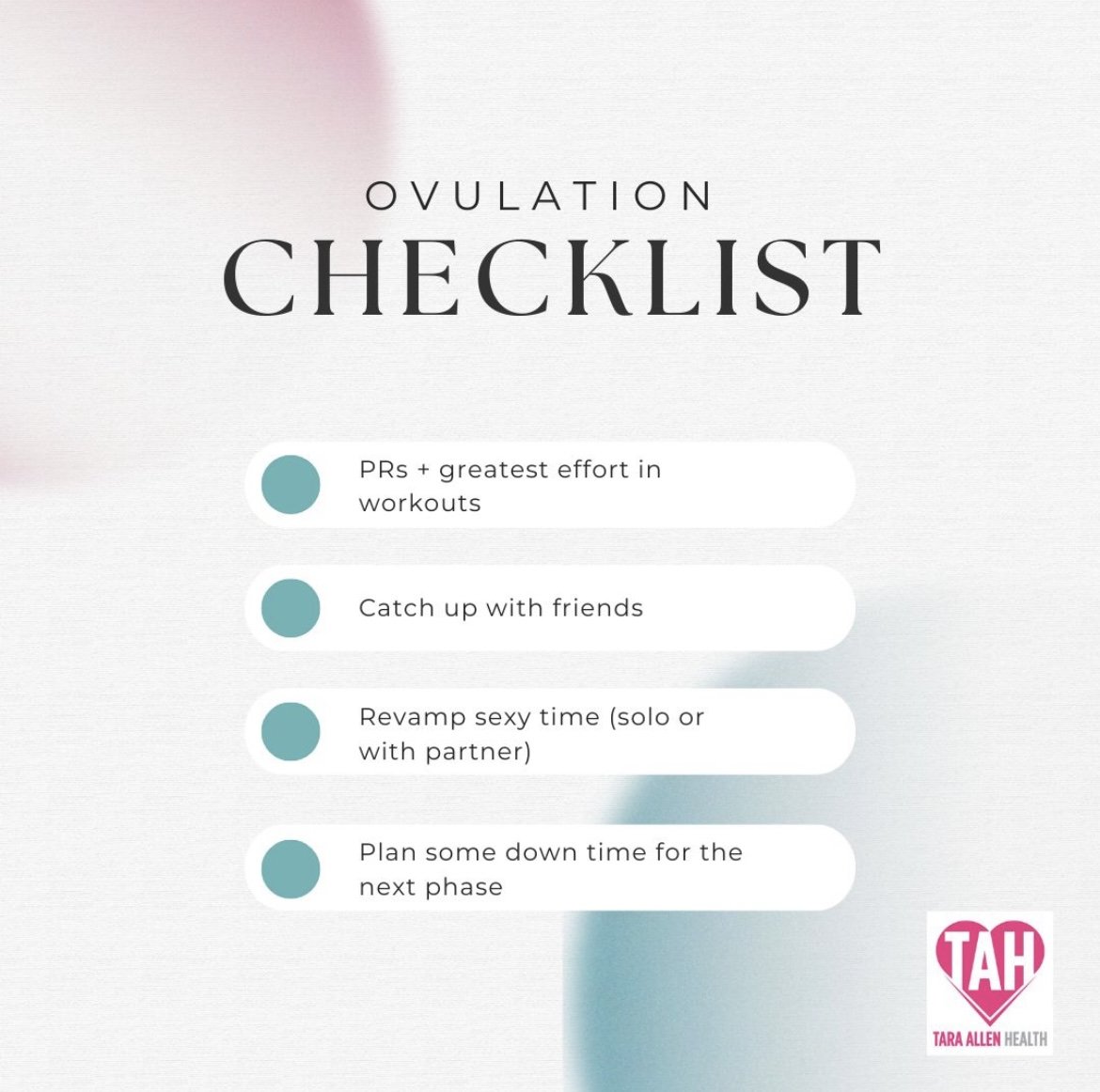
I created a few simple checklists in case you are new to this idea of cyclical self care. Save 'em. Screenshot 'em. Share 'em with a friend.


ANNOUNCEMENT: The Fall PFF Slow Cooker Recipe Collection is now available! It's an e-cookbook with recipes that can all be made in your Crockpot that are already balanced for fat loss + "toning up" goals in mind. CHECK IT OUT HERE.


XO,
Tara

10 healthy things I'm keeping up with this summer ... and 3 I'm not

Summer Lovin' sometimes ends up becoming Summer Everything-fell-by-the-wayside.


With the kids home from school all summer, it can be a lot more challenging to stick to a routine. Today I'm sharing 10 things that I'm proud to say kept their presence in my days and weeks this summer ... and 3 that I was hoping would but definitely did NOT.


1. Morning sun. Most days I've been getting outside even before my early morning workout but on the days I haven't, I've been out shortly thereafter. This is perfect because anything that helps boost mood, energy, improve sleep quality, balance blood sugar, rev up metabolism -- and is FREE -- I wanna be taking advantage of!


2. Grounding. This involves touching nature. I know that sounds weird, but gardening, walking on the grass or sand and getting caught in the rain all count. This has cardio-protective benefits and boosts our feel food neuromodulators (helps with mood and energy as well). Since I'm almost always barefoot around my house, this has been really easy to sneak in with the morning sun. I just step outside without putting on shoes.


3. Strength training. This is one of the most potent anti-aging and metabolism-boosting tools we have at our disposal. I have kept up with my workouts even when it's meant moving them around or shuffling the schedule as needed.


4. Sleep. Every night I've gotten at least some sleep. Do I get a trophy? HAHA j/k. But the truth is even when I've gotten off track because I was up late working a bunch, we got home at 1 AM from a Billy Joel concert, we watched 2 episodes of Severance instead of the 1 we had planned, or the kids were up and in our bed a bazillion times, I have been on top of making sure sleep rises higher on the priority list again within a reasonable amount of time.


5. PFF meals. Even when I've had to pack grab-and-go options this summer (we're constantly on the go!), I have been sure to include protein, fat, and fiber in probably 95% or so of my meals and in the por that my body needs. This has been such an important staple as I've reversed my PCOS, prediabetes, and hypothyroidism and has helped me feel my best + strongest now at 39 than ever before.


6. Hydration. Ok, so this used to always be a weakness for me but this summer I feel like a hydrated Queen ... or at least just not like I'm a walking dessert surrounded by skin anymore. :-P


7. Electrolytes. So it may be cheating that I'm giving this one it's own spot on the list because it's technically part of the hydration bit, but I feel so much better when I'm replacing some electrolytes each day. We can get this through our food if we're intentional about it or make it ourselves, but I've been using a pre-made version called ReLyte (not an ad) and I just tailor the amount I use to what I need for that day.


8. Oral hygiene. I'm not even sure I should be giving myself credit for this but I always tell you guys to celebrate every little victory so I'm gonna walk the talk here. It's floss-then tongue scrape- then brush with a nano-hydroxyapatite toothpaste and even though it only takes a few minutes, I never skip it ... even if I'm away. (Oh ... what's it like to be away? It's been SO LONG for me! LOL)


9. Supplements. There's a reason I share some of what I take and not "a day of supplements" or anything. It's because I take different things based on my unique needs and it switches up depending on things like where I'm at in my cycle, when I want to take a 'supplement holiday' from certain things at certain times, or I may run out of something. Haha. But I have this habit of kicking off my breakfast-making by taking my morning supplements. It's automatic now and as such, it shows up even when I'm a chicken with my head cut off.


10. Positive self talk. It's still, "I'm juicier now" rather than "I'm gross + bloated now". It's "that was more food than what feels comfortable in my body" rather than, "I can't believe I overate again." The cool thing about this is that while it takes lots of practice, it doesn't require any additional time.


Ok, so now onto what has fallen by the wayside a bit this summer ....


1. The sauna. I was getting 2-3+ sessions per week in when the kids were in school, but have only gotten in 2-3 sessions this whole summer so far. It's cool. I'll get back into it when they return to school as I have a good rhythm of fitting it in after my workout and after I get them off to school but before my shower. I start my work day from the sauna to save time (more habit stacking!).


2. Daily walks. See above. I've been very active (mostly cleaning up and chasing after the kids), but there haven't been official daily or even near daily walks. I'm not upset about this though as I tend to need the walks a lot more when they are in school and I could otherwise find myself sitting and working for long stretches. So ... September is the walking comeback!


3. Unwinding. Ok, so this is the only one of the 3 that I am actually not too thrilled with myself about. Back in the day I used to have VERY high cortisol levels. I am someone that needs even just 10-20 minutes of unwinding each day (read, bath, meditate, journal, etc.) and it's been barely there this summer. The excuse is that I was creating and taking a pre-launch group through a brand new course that I created AND a brand new monthly membership app I created while still running all other aspects of my business and being mama-without-childcare. And that's all true and understandable! But I'm no good to anyone if I burn out, so this one needs to improve ASAP. I'm gonna start with a mandatory 5 minutes of unwinding before bed. If I can't fit in 5 minutes, what am I even doing?!


Maybe this email included more details than you ever wanted to know about me. HAHA. Or maybe you find it helpful to see what I prioritize and how I plan to get back on track with some things.


Oh, and speaking of that course I created (shameless plug incoming), the cart will open in LESS THAN 24 HOURS to sign up for it! It's called TRANSFORM: Body + Mind and is a 28-day metabolism-boosting course for those with fat loss, muscle-building, and / or "toning up" goals who also want to improve their relationship with food + their body. We do all of this while optimizing health because I don't believe any other way makes sense. If you're not yet on the waitlist, hop on now .... quickly! I'll be pulling the waitlist down later today but if you get on there before, you'll get a discount code when the cart opens tomorrow.


XO,
Tara

You're "doing everything right", right?


Sometimes it's not a lack of discipline that's derailing our progress, but misguided advice instead! Today I'm sharing 5 of the most common "healthy habits" I see people -- mostly women -- using for fat loss while getting no (or the exact opposite) results.

Next week — on Wednesday — the cart will be opening for the very first public launch of TRANSFORM: Body + Mind, my 28-day metabolism-boosting course. HOP ON THE WAITLIST NOW to reserve your spot and get a discount code when it's go time. ;-) 

XO,
Tara

No willpower or motivation? No problem ...

When Will Power and Mo Tivation have left the building ...


... it can be tempting to point our fingers there and throw our hands up in frustration. "I guess I'll never reach these goals. I have no willpower. And if I could just get motivated ..."


But what if I told you willpower and motivation aren't necessary? Would you believe me?


We all have a finite amount of willpower. If it's being used all day long, you will cave eventually. Here's the work-a-round: Set up your environment and biology for success.


1) Ya know how you eat entire jars of peanut butter in a day or 2? Or maybe it's the ice cream that doesn't stand a chance? Whatever your particular foods are that you seem to have a lot of trouble with portion control around, don't keep them in the house! Keep almond butter instead. Or sorbet or something. Compromise with your loved ones on this and when you really want it, go out and get a single serving. One day, you will be more balanced and not have to worry about these trigger foods holding any power over you. But for now, this will help.


2) Balance your biology! Your cells are meant to scream for excess energy if you are under-nourishing them. This could be from skipping meals, trying extended fasts that are beyond what your adrenals can handle right now, or maybe you're eating too many empty calories and not enough real food. Also, if your hormones and blood sugar aren't balanced, you will find yourself trying to rely on willpower in situations where some others just don't seem to need it.


Now... motivation! She's sexy when she's here, isn't she? You almost feel superhuman when you're motivated to do something, right? But she's flakey and unpredictable. Thankfully, you don't need her. You can use discipline to do the thing anyway. That action builds momentum. And that momentum you create tends to attract motivation to swing by more often. But even if she doesn't? Who cares. You have discipline. And discipline is a bit more boring, but superrrrr loyal.


How do you tap into discipline? First, you set SMALL goals that you know are doable even when you don't want to do it. ASSUME you won't be motivated when the time comes. Is the thing you're promising to yourself small enough that you can get it done anyway? The answer should be a resounding YES.


So, you don't start drinking half your body weight in ounces of water today. You drink 1 glass of water before you let yourself have your coffee today.


You don't do a full Tara Allen Health workout from instagram or someone else's from youtube today. You do the first 5 minutes.


And you don't perfectly balance all of your meals today. You add a veggie to your lunch.


Aaaaaaand, you don't do ALL of that in 1 day. You pick 1 or 2 things and add more only when you can consistently rock those 1 or 2 things.


No willpower, no motivation, all the health and body goals. You are in the driver's seat. Always.


XO,
Tara


P.S. If you have said to yourself or anyone else in the past few days that you need help -- that you have fat loss, muscle-building, "toning", blood sugar balance issues, or a slow metabolism -- then I look forward too seeing you in September. TRANSFORM: Body + Mind is the 28-day course you need. Make sure you're on the waitlist as waitlist peeps will be getting a discount code.


P.P.S. If you want to start to feel the effects of balancing your meals BEFORE the September round of TRANSFORM: Body + Mind, grab my latest Fat Loss Meal Plan available for purchase.

Thyroid Issues?

Know anyone with thyroid issues?


The thing about thyroid issues is that the issues themselves are not the problem, but rather a symptom of the problem. If it's auto-immune in nature, why is your body's immune system overreactive? If it's just your garden-variety hypo- or hyper- (or mixed) -thyroidism, why is your body not able to regulate the important functions of this mighty gland right now? Where might it be needing to put out fires elsewhere that it had to drop the ball?


I'm NOT against conventional treatment when necessary, but I strongly believe that conventional treatment or not, if we don't optimize, other health issues will keep popping up because nothing was truly fixed at the root.


Thyroid health is often so much more complicated than just looking at 1 or a few lab values. In fact, many doctors don't even order enough lab tests to get the full scope of what's going on. If you suspect a thyroid problem, be sure to seek out a medical practitioner you really trust and one who is comprehensive and willing to look for the root cause of why your thyroid is acting up in the first place.


Hyperthyroidism is out there for sure, but most people who come to me for help do so because of hypothyroidism. Hypothyroidism can often cause weight gain or weight loss resistance, dry or brittle hair and nails, depression, cold intolerance, low libido, low energy, high blood pressure, high cholesterol, imbalanced blood sugar, and painful or missed periods.


Due to a bunch of recent questions on the topic, I decided to dedicate a whole week on my socials to thyroid dysfunction. Check out THIS POST where I discussed how I would induce hypothyroidism in myself if I wanted it again (I had it. Reversed it. Don't want it back, but it helps prove the point that our previous and current choices matter when it comes to this stuff.)


Here are ways to promote healthy thyroid function (alongside conventional treatment, on your own, or even if your thyroid is currently healthy and you want to keep it that way):

  • NO yoyo dieting or over-restriction.

  • Fuel your body well and with the right amount of food for your needs. This is something everyone should know about themselves, but few actually do. Make it a point to learn this!

  • Eat enough carbohydrates. Most people eat too many. Some cut out too many. Just like the last point, know what you need. If you have hypothyroidism, I recommend adding an extra carb serving per day on top of your baseline needs.

  • Avoid toxins in beauty and home products, extra hormones and antibiotics in your food supply wherever possible.

  • Avoid overexercising or practicing a maladaptive ratio of exercise (like tons of cardio and no strength training)

  • Eat and live your life in a way that promotes blood sugar balance

  • Test of levels of micronutrients like zinc, iron, magnesium, iodine, selenium, vitamin B complex, vitamin D, vitamin A and / or be sure to include enough of them through your food intake. Consider talking to your healthcare practitioner about supplementation.

  • Give yourself 7-9 hour sleep opportunities most nights of the week

  • Reduce stress and work on stress management tools like breathwork, mindfulness practices, self care, boundaries, new hobbies, time outdoors, etc.

  • When stress levels are normalized, consider adding cold exposure a few times a week. This helps convert some of our regular white fat to brown / beige fat - a more metabolically active type AND helps the thyroid gland produce better hormone ratios.


If you need help with one or any of these areas, make sure you hop on the waitlist for TRANSFORM: Body + Mind. It's my 28-day course on boosting metabolism, healing, and we cover everything in the list above and more! The next round starts in September and if you're on the waitlist, you'll get a discount code and be notified when the cart opens so you can grab a spot.


Oh, and I put together THIS RECIPE COLLECTION for you. It contains thyroid-supportive recipes containing the nutrients listed above as well as a carb source, at least 5g fiber, 10-30g healthy fat, and at least 20g protein per recipe. Hope you love 'em!


XO,
Tara


P.S. I think you need my weekly newsletters. It’s time. You can sign up RIGHT HERE. :-)

Period Tawk / Cycle Synching

Let's talk about menstrual things ...


And if you are post-menopausal or someone who doesn't have a menstrual cycle, I'm getting to you guys too.


I've been chatting a lot on instagram lately about menstrual cycles and cycle synching because I decided to add a last-minute resource to TRANSFORM: Body + Mind all about it and since I'm trying to stay hip and share BTS (what the cool kids say for behind-the-scenes), I've been discussing it in my stories.


I also shared that I practice cycle synching related to fitness, nutrition, and some other lifestyle things too. That resource ended up being SIX PAGES because we women really are complicated, beautiful creatures! But I wanted to share a recap here with you in case you find it helpful.


HERE IS A QUICK RUN-DOWN of the 4 phases of our menstrual cycle. It's a bit more nuanced than that, actually. Technically speaking, we have 2 phases: follicular and luteal with our period and ovulation occurring within and overlapping with those 2 main phases. But it's much easier to think about it as 4 distinct phases when it comes to cycle synching, so that's how I'll be referring to it here.


During our period, it's often most natural to reduce workout intensity in the first few days but dial it back up towards the tail end as hormones and energy levels start to climb. Think about using slightly lower resistance but adding a few more reps to strength training workouts, reducing cardio pace, and incorporating longer rest intervals in a HIIT sesh. 


In the follicular phase, we are usually feeling stronger and can push the weights and pace a bit more. We tend to have more manageable hunger levels and can tolerate carbs and caffeine a bit more (more insulin sensitive).


During ovulation and the few days surrounding it, while we may notice PMS-like symptoms (such as mood changes and water retention), the surge in testosterone means we're usually at peak strength. This is a great time to lift heavier and maybe even go for a PR (personal record) if you're into that sorta thing. 


In the luteal phase, you'll likely notice a gradual drop off in energy and desire to be social. The same amount of tasks that you handled like a pro during your follicular phase might now seem extra overwhelming. As your energy dips, you can slightly decrease resistance and / or pace and / or increase rest time between sets as needed. We are slightly more insulin resistant in this phase and caffeine can trigger worsening PMS symptoms, so consider being extra intentional about eating enough carbs but NOT too much and cutting back on coffee or weaning to decaf during this phase. Metabolic rate is slightly elevated, so go ahead and nourish yourself well with PFF (protein, fat, and fiber) at every meal and carbs at 2ish meals per day. Most people need an afternoon snack as well.


What if you are post-menopausal or a man? Well, you have some more wiggle room! You can use some of these same strategies to cycle around just regular life. Feeling like pushing yourself more today? Go for it! Having a little less energy? Show up and be proud of just doing what you can and listening to your body.


That's it for now! Hope it helps you stay consistent but flexible as you act like a best friend to your body rather than a mean girl.


XO,
Tara


P.S. If you could use a meal plan that's already balanced with adequate amounts of protein, fat, and fiber in each meal plus carbs at 2 meals (a moderate carb approach), GRAB IT HERE. You'll get two, actually: a plant-based version and an omnivore version. Use the one you want or both if you'd like! Hope you enjoy.

Calorie deficits... a misnomer?

Are calorie deficits a real thing?


Well, sort of. But also not really.


LET ME EXPLAIN.


Questions? Simply shoot an email to tara@taraallenhealth.com to get right into my personal inbox!


XO,
Tara

IMG_4900.jpg

Eating healthy on-the-go

Eating healthy on-the-go...


We've all made those proclamations. We're going to make better choices when we're out for the day. Maybe we'll bring food with us. Or we'll just choose the 'healthiest' option available.

But then we slowly get confused by the choices, our food prep game goes quiet, and we're right back where we started.

In my latest Workshop Wednesday video (below), I spoke about eating health on-the-go. There are 3 tips that you've heard before (but are still valuable)...and one that you've likely never considered. 

Short and sweet today. If you check out the video, drop a comment and let me know your thoughts!

XO,
Tara