I’m incapable of learning something fascinating about the human body and keeping it to myself.
You're welcome? (I guess?)
So here's what's up ...
Researchers recently aimed near-infrared light at people’s chests for 15 minutes.
Not their eyes. Their CHESTS.
And 24 hours later, their visual function improved.
So ... what if red light therapy is SYSTEMIC?
This was a 2025 study from Glen Jeffery and colleagues, and there are a few things about it that I really like. For one, they didn’t just shine a red light on someone and ask if they felt better. They were actually testing whether light could get through the thorax, and then they exposed the chest to near-infrared light for 15 minutes while shielding the eyes. Then, 24 hours later, they saw an improvement in visual function.
Before we all streaking down the street and flashing our chests at the sun, there are some caveats here...
It was a small study — 40 people — in healthy adults. It was looking at a very specific measure of visual function, not whether people with eye disease suddenly had better eyesight. It was also a short-term study, so we have no idea what happens with repeated exposure over months or years.
The researchers haven’t nailed down exactly HOW the effect happened. Which is where this gets really interesting to me (because I have thoughts).
If this really is a systemic effect, I want to know what else is responding to that signal. The things photobiomodulation seems to influence — mitochondrial function, ATP production, oxidative stress, blood flow, cellular signaling — are pretty damn relevant to metabolism and body composition too (and plenty of other things), not just eyesight. Muscle, fat, liver, brain, blood vessels...none of these guys are operating in little isolated bubbles. They’re constantly talking to each other. So I'm curious ... if you change what’s happening in one part of the body with light, can you change some of those conversations elsewhere too?
If I could design the next study, I would want to see this tested for way longer and with outcomes that matter for metabolic health. Give people a standardized dose of near-infrared light, follow them for a few months, and measure body composition, insulin sensitivity, glucose, resting metabolic rate, mitochondrial function, muscle performance, etc. Maybe nothing happens. Maybe the effect is tiny. Maybe we find out there’s a very specific dose or tissue or timing that matters. Orrrr maybe we discover that light has been messing with our biology in ways we didn't fully appreciate. I have no idea yet. But if the biology we’re already seeing holds up in humans, I would be VERY interested to see what happens when start asking better questions.
We tend to think about red light therapy like skincare -- shine it on the thing you want to affect. Knee hurts? Knee gets the light. Skin? Face. Hair growth? Scalp.
And yet we know the body doesn’t really work as a collection of completely independent parts.
Photobiomodulation can influence things like mitochondrial activity, ATP production, oxidative stress, blood flow and cellular signaling in the tissue being exposed. Once you start changing what cells are doing, you have a whole communication system that can potentially carry those effects elsewhere.
Cells communicate through circulating molecules, inflammatory signals, the nervous system, changes in blood flow and a whole bunch of other mechanisms we’re still figuring out.
So what happened in the chest when the light hit it, and what signals did that create throughout the body? I think it lies in the theories above.
To be clear, this study does NOT prove that shining near-infrared light on your chest improves your eyesight long-term. It’s one small human study that gives us a pretty damn interesting reason to investigate the possibility of systemic effects.
I actually think that’s the fun part of science! The good studies don’t always give us a neat little conclusion wrapped up in a bow. Sometimes they just get us to ask better questions.
Does this mean everyone needs to order a red light device pronto? No!
I do use my Lumebox every freaking day because I like being able to get a consistent dose regardless of the weather, season, and my schedule. It's a supplement and a tool we use for all kinds of things in my house.
This is the one I use -- it's 3rd party tested, portable, holds the charge for a LONG time, and is safe + effective. I have an affiliation with them and this discounted link gets you 43% off if you're in the market for a versatile device that can be used on any part of the body or whole-body.
Light itself is a biological input. We spend a ridiculous amount of time indoors, under artificial light, looking at screens, and just giving our biology a very different light environment (and much less red and infrared light) than the one it evolved around.
So if you don’t want to buy a red light device or it's not in the budget right now? No prob. Go outside. Go outside especially around sunrise and sunset, when red and near-infrared wavelengths make up a greater percentage of the light reaching you.
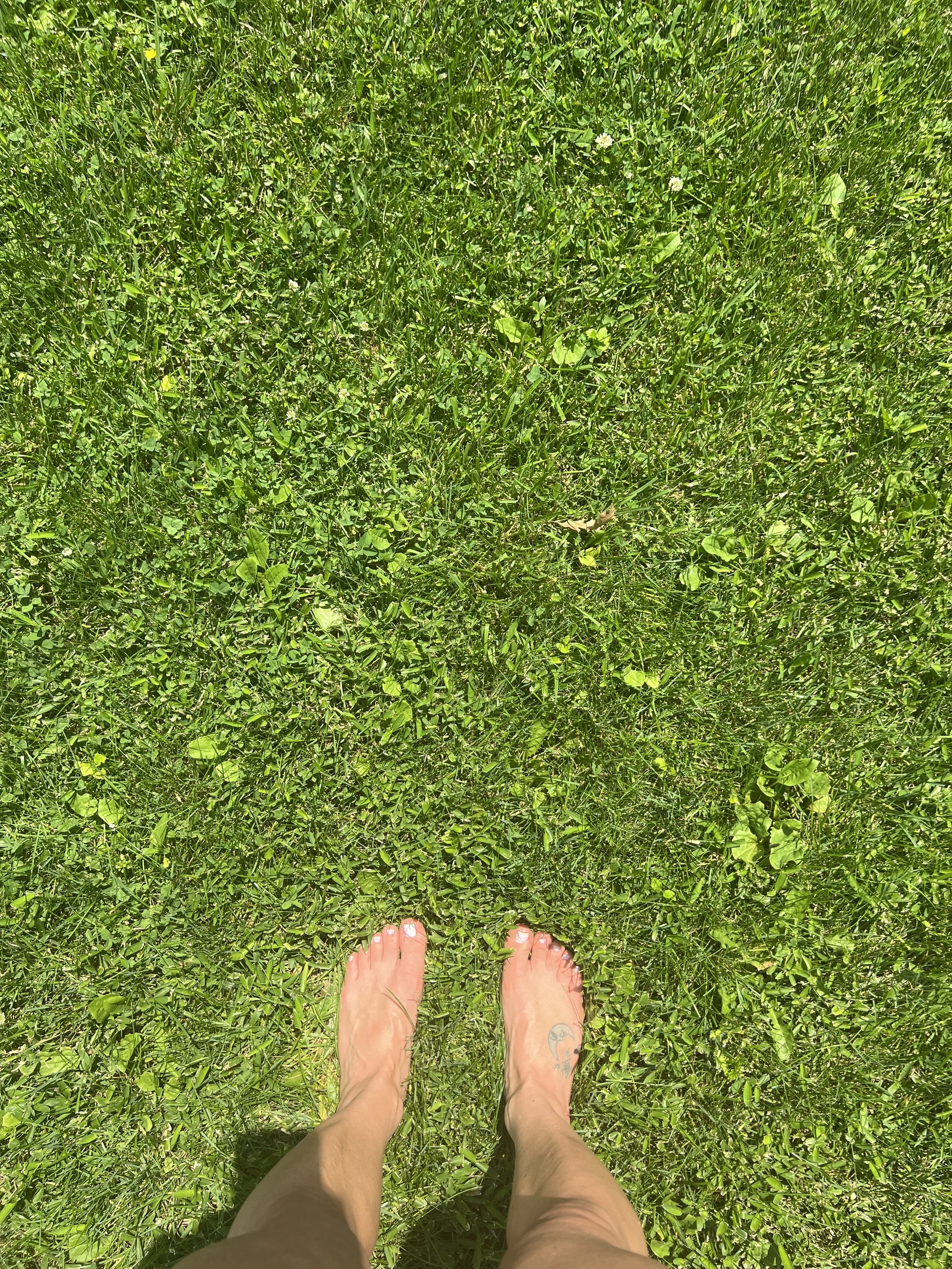
Drink your coffee outside. Take the dog out for a walk. Take yourself out for a walk. Stand barefoot on the grass brushing your teeth. (Who cares what the neighbors think?? You have 2 choices in this world -- you can be embarrassing or you can boring.)
Your body evolved with light information coming at it all day long — not exclusively through recessed kitchen lighting and the iPhone you're reading this on right now.
I think we’re going to learn even more (a LOT more) about light as a biological input over the next decade. I've been doing some work of my own in this area lately, and ... I'm pretty damn interested in where this research is headed. There’s some fun + interesting stuff happening behind the scenes that I can’t quite talk about yet.
For now? Maybe go watch the sunset.
Stay wild + well,
Tara
P.S. Here's a free red light therapy guide I made a while back if you'd like more info on the science, what it's used for, protocols, how we use it in my family, etc.
P.P.S. LAST CALL for The Metabolic Edge waitlist because doors open next week for the September round and then I’m closing it. This is for the woman who wants to feel better in her body and actually understand what the hell is going on with her metabolism — whether you’re already doing a lot and feel stuck, or you’re starting from scratch and have no idea where to begin. We’ll tackle nutrition, strength training, metabolic health, hormones, recovery, habits, and all the messy little pieces that make this stuff actually work in real life, with workouts, guidance, education, accountability, and support along the way. Basically, less Googling at 11 PM, more knowing what to do and actually doing it. Get on the waitlist before doors open next week.