Before we get into the skin stuff, I want you to know The Metabolic Edge is open today and tomorrow only.
If you’re tired of guessing why your body feels different, trying random things, starting over every Monday, and wondering why the stuff that used to work suddenly doesn’t…this is exactly what we’re working on. Nutrition, strength, body comp, hormones, recovery, workouts, education, accountability — basically helping you understand what the hell is going on and what to actually do about it. Doors close tomorrow, then we crush our September goals together! Now, let’s talk about skin.
I have regular skin.
I feel like we need to establish this immediately. 😂
Nobody has ever stopped me in a grocery store to ask how I achieved my glass skin. I have pores. I break out sometimes. I have lines. The skin on my body has started doing a few vaguely crepey things that I did not sign up for.
I’m 43 and that's very normal.
I’ve also never had a facial. Or Botox. Fillers. Lasers. PRP. Microneedling. Peels. Injectables. Any of it. I think it’s fantastic that we live in a time when people have a bazillion options for what they want to do with their faces. I reserve the right to wake up at 52 and decide I would like someone to laser my entire head. Currently, though, that’s not where I choose to spend my time or money. And my particular life circumstances makes getting out for 'extra' appointments extraordinarily difficult anyway.
So this is an email from a health nerd who happens to own skin.
I think skin gets discussed in a very strange way. We talk about it like it’s wallpaper. Something happening on the outside that we need to fix from the outside. But your skin is living tissue. It’s vascular, immune-active, hormonally responsive. It has its own microbiome. It follows circadian rhythms. It responds to nutrients, glucose regulation, inflammation, stress hormones, sleep, exercise, sunlight, and gut health.
My general philosophy on skin is that it’s mostly an inside job. Then I use skincare to fine-tune. And yes, I have products I like. We’ll get there.
But first we need to talk about your muscles. (Obviously -- HAHA).
YOUR DUMBBELLS HAVE A SKINCARE ROUTINE
Researchers took middle-aged women and had them do either aerobic training or resistance training for 16 weeks. Both improved skin elasticity and the structure of the upper dermis. But resistance training did something extra -- it increased dermal thickness.
Mmhmm. Lifting weights changed their skin.
The researchers found changes in circulating factors, including inflammatory signaling, along with changes associated with the dermal extracellular matrix, which is the structural scaffolding around our skin cells.
This is important b/c aging skin involves the whole extracellular environment. Collagen, elastin, proteoglycans, water-binding molecules, inflammatory signaling, fibroblast behavior.... it's all changing.
Muscle contractions are also endocrine events. Working muscle releases myokines and other signaling molecules into circulation. The biceps curl is occurring in your arm, but the biochemical conversation does not stay in your arm.
YOUR SKIN KNOWS WHAT TIME IT IS
Believe it or not, skin has circadian clocks. Keratinocytes and other skin cells express clock genes, and things like barrier function, transepidermal water loss, cell proliferation and DNA repair fluctuate across the 24-hour day. Some repair activity ramps up at night.
So sleep a literal part of skincare.
Your nighttime routine includes whatever you put on your face before bed, but it also includes actually going to bed.
Circadian disruption and inadequate sleep can interfere with processes involved in barrier recovery and repair. Your skin is doing scheduled maintenance and would very much appreciate if we stopped hosting a Times Square amount of shenanigans in our eyeballs at 11:32 PM.
We need morning outdoor light, bright days, dim evenings, dark nights, consistent sleep / wake timing, and actual sleep.
Very boring. Very free.
AND THEN THERE’S THE GUT
Your gut and your skin are having a conversation behind your back at all times. It's called the gut-skin axis.
Both are enormous interfaces between you and the outside world. Both contain complex microbial ecosystems. And, they are both heavily involved in immune regulation.
Gut microbes also manufacture metabolites that can enter circulation and influence immune signaling elsewhere. Changes in intestinal microbial communities and barrier function can affect inflammatory signaling, oxidative stress and immune activity.
So when I’m thinking about someone’s skin, I’m also thinking about fiber, plant diversity, protein, omega-3 fatty acids, micronutrients, poop, GI symptoms, alcohol, ultra-processed food intake, glucose regulation and whether they’re eating enough food in general.
You cannot indefinitely underfeed a human body and expect it to prioritize luxurious hair, nails and skin. So any calorie deficits for fat loss reasons needs to be carefully, responsibly, and with an understanding of what's not too much of a deficit in terms of quantity AND duration.
WHAT I WANT ON THE PLATE
Skin has to physically build things.
Collagen requires amino acids. Vitamin C is used in collagen synthesis. Zinc is involved in wound healing and cellular processes. Essential fatty acids contribute to barrier function. Vitamins A, C and E, selenium and a whole cast of micronutrients participate in antioxidant defense, differentiation and repair.
I want adequate protein across the day. Colorful plants. Berries. Citrus. Peppers. Tomatoes. Leafy greens. Cruciferous veggies. Herbs. Spices. Omega-3s. Fiber feeding the microbes that produce short-chain fatty acids. Enough calories to support repair.
Annnnnnd I want healthy glucose regulation because chronically elevated glucose can increase formation of advanced glycation end products, or AGEs. These can cross-link proteins including collagen and make tissues stiffer and less functional over time. It can also impact androgens and lead to things like acne, cystic acne, unwanted facial hair growth, etc.
My skin, like every other organ I own, experiences the metabolic environment I create most of the time.
STRESS SHOWS UP ON YOUR FACE (OF COURSE IT DOES)
Skin has extensive neuroendocrine + immune communication. Stress signaling can influence inflammation, barrier function, immune activity, sebaceous (oil gland) activity and healing.
You have probably already run this experiment yourself. Have a terrible week. Sleep five hours. Eat weirdly. Get constipated. Live entirely indoors. Become one with your phone. Then look in the mirror and not love what you see.
So yes, nervous-system regulation belongs in the skin conversation too.
Walk outside. See people who light you up. Laugh. Exercise. Eat enough. Get morning sun. Do things for the joy or peace of it.
None of this photographs particularly well beside a tiny glass dropper bottle or makes the influencers' "Things for my skin I can't live without" carousel slides. I remain very interested in it anyway.
THE SUN CONVERSATION
Here is where my personal philosophy probably diverges from a purely cosmetic skin-aging strategy. UV radiation contributes to photoaging. It damages DNA and contributes to collagen breakdown, pigmentation changes and skin cancers. I take that seriously.
I ALSO take the biology of light seriously.
Humans evolved under a giant lightbulb in the sky. Light entering our eyes helps entrain circadian rhythms. Outdoor light exposure affects sleep / wake signaling. Sun exposure contributes to vitamin D production and has lots of other physiologic benefits.
I care about my entire body more than I care about making my skin look as young as possible. My personal goal is enough sun without routinely burning or accumulating ridiculous amounts of UV exposure. I get outside, do morning light, allow some unprotected skin exposure. I also use shade, clothing and mineral sunscreen depending on the time of day, season, duration, and what I’m doing.
Could my skin eventually show more sun aging than someone’s who has spent 40 years meticulously avoiding UV? Sure! And I’m very comfortable with that tradeoff. My skin is one organ participating in an entire human organism, and that’s the lens I use for pretty much everythinggggg.
RED LIGHT
Come on, you knew this was coming.
Red and near-infrared light interact with cellular photoreceptors and can alter mitochondrial and cellular signaling, a process generally called photobiomodulation.
For skin specifically, research has looked at fibroblast activity, collagen production, inflammation, wound healing, texture and wrinkles.
One randomized trial in women ages 40– 65 found that a series of red-light treatments significantly reduced periocular (around the eye) wrinkle volume. Other research has found changes in collagen-related measures and skin appearance.
This doesn’t mean five minutes in front of a red bulb turns you into a fetus. Please don’t email me in six weeks about this. Light is a biological input, and certain wavelengths are capable of changing cellular behavior in ways that can be useful for skin.
I use red light regularly for reasons that extend way beyond my face. Skin benefits are basically one more item on an increasingly weird list of reasons I like it.
This is the one I use and love. It's 3rd party tested (b/c I don't believe in companies grading their own homework), portable, effective. I have an affiliation with them and this link saves you 43% right now.
NOW WE MAY DISCUSS THE STUFF I PUT ON MY FACE
Finally. 😂
My skincare philosophy is pretty simple -- I want to protect the barrier, keep inflammation reasonable and use a few ingredients that actually have a purpose. I do not want my bathroom to become a chemistry lab that requires a spreadsheet though.
Everybody has different skin types, budgets, sensitivities, and priorities, so please don’t interpret this as The Tara Allen Official Face Prescription. These are just things I currently like or use.
Bambu Earth Cactus Concentrate/Moisturizer
(You can use code TARAALLENHEALTH for 20% off any of their stuff)
I like simple hydration and barrier support, and my skin just really likes this one. It's gentle, non-toxic, smells amazing (but no false fragrances), and makes my skin so dewey!
That is basically the review. 😂 No one is paying me to say any of this, but where noted, my link or codes do earn me a small commission.
Azelaic acid
I’ve been using The Ordinary’s azelaic acid. I think it’s worth mentioning even in a conversation about “clean” products because I don’t think skincare ingredients sort neatly into GOOD and TOXIC buckets. Azelaic acid is a naturally occurring dicarboxylic acid, and topically it can be useful for acne, redness, inflammation and pigmentation. It’s also commonly used for rosacea.
My skin has been happy with it.
Crunchi
I use quite a few Crunchi products, including their facial sunscreen, and most of my makeup is Crunchi. I like the company’s ingredient philosophy and I like how the products perform, which is really all I require from makeup.
OneSkin (I believe this link saves you 25% off right now). I use OneSkin too. This one interests me because their approach is based on cellular senescence, including the accumulation of senescent cells and the inflammatory signaling environment associated with them. Their proprietary peptide, OS-01, was developed around that biology.
There are published data behind the ingredient, although I keep the same mental distinction with skincare that I keep with supplements ... mechanistic and company-supported research can be interesting while we wait for a much larger body of independent clinical evidence.
I use it because I find the mechanism interesting and I like the product! I love the way it feels and I have noticed my skin is happy when it's in the rotation.
That is the full scandal. Haha.
HOW ABOUT RETINOIDS?
We have to talk about these because retinoids are among the best-studied topical tools we have for photoaging. Prescription tretinoin, or Retin-A, has evidence for improving fine wrinkles, pigmentation and collagen-related changes over time. Retinol and other over-the-counter retinoids operate in the same general biological neighborhood, although potency and conversion differ.
They can also be irritating.
Dryness, peeling, redness and barrier disruption can become a whole situation, particularly in sensitive or reactive skin. I think people sometimes become so determined to tolerate a 'gold standard' ingredient that they spend six months walking around with an angry face.
Some people do beautifully with retinoids. Some need very low frequency, lower strength, moisturizer buffering or a different retinoid. Some have skin that is much happier without them.
OKAY BUT WHAT ABOUT VITAMIN C? HYALURONIC ACID? PEPTIDES? THE OTHER 900 THINGS?
Good questions. 😂 There are several other ingredients that come up constantly in skincare conversations, so here is my current level of enthusiasm about them...
Vitamin C serum
Vitamin C actually has some pretty interesting skin biology behind it. It’s an antioxidant, it’s involved in collagen synthesis, and topical vitamin C has been studied for photoaging, pigmentation and protection against some of the oxidative damage associated with UV exposure.
The annoying part is the bottle.
L-ascorbic acid, the form with the most research behind it, is notoriously unstable. Light, heat, air, pH and the rest of the formulation matter. It can oxidize sitting in the bottle, which means two products that both say “vitamin C” on the front can be very different products biologically.
I think a well-formulated vitamin C serum can be a very reasonable addition.
I’m also not convinced everyone needs to spend $150 on a tiny bottle of it while eating just four strawberries a year. I care about getting enough vitamin C into the actual human first. Then we can discuss the face.
Hyaluronic acid
Hyaluronic acid is already a normal component of your skin’s extracellular matrix, and it’s extremely good at interacting with water. Topically, it functions mainly as a humectant, helping attract and hold water near the surface of the skin.
Sooooo hydration. It can help with plumper-looking skin. Fine lines can look softer when the skin is well hydrated.
I just think the marketing sometimes gets way ahead of what the product is actually doing. It’s a very good hydration ingredient. We are allowed to appreciate something without pretending it does more.
Niacinamide
This is another ingredient I think earns some of its popularity.
Niacinamide is a form of vitamin B3, and topically it has evidence for supporting barrier function, reducing transepidermal water loss, helping with inflammatory activity and sebum regulation, and improving the appearance of pigmentation + fine lines.
It also appears to support ceramide synthesis, which interests me because I care a lot about having a functional skin barrier.
The funny thing is that skincare has apparently decided if a little niacinamide is good, 10% niacinamide must be AMAZING. Not necessarily. A lot of the clinical research has used concentrations around 2–5%, and higher concentrations can be irritating for some people. Sometimes more just means your face is mad at you.
Topical peptides
There are a LOT of topical peptides being marketed now. Signal peptides, carrier peptides, copper peptides, various proprietary peptide combinations, with claims around collagen, elastin, wound repair, pigmentation and cellular signaling.
The biology makes sense. Peptides can act as signaling molecules, and there are interesting laboratory studies and some (not enough) human data.
Where I think we still have a lot to learn is which peptides, in which formulations, at which concentrations, create meaningful changes in actual human skin over time.
A peptide influencing fibroblast behavior in a dish does not automatically tell me what a bottle of serum is going to do to my face. So I’m watching this category.
AND PLEASE WASH YOUR FACE
I somehow made it this far without discussing cleansers. Probably because cleanser is the least glamorous part of skincare, which may be exactly why I like it.
The job is pretty straightforward: remove makeup, sunscreen, sweat, excess oil, dirt and whatever else you collected while being a person that day without unnecessarily wrecking your barrier.
Your skin surface is supposed to have lipids. It has a microbiome. It has an acidic environment. Squeaky-clean is NOT a good goal.
If your face feels tight, dry and weirdly shiny immediately after washing it, I do not consider that evidence that you did an especially thorough job. I want a cleanser that cleans my skin and then leaves.
If you wear makeup or a water-resistant sunscreen, you may like an oil or balm first cleanse followed by a gentle cleanser. If you don’t, one gentle cleanse may be plenty.
Dry, sensitive, acne-prone, oily, rosacea-prone, perimenopausal, using tretinoin — these are all going to behave differently.
I care much more about how your skin responds to your cleanser than whether TikTok has placed that cleanser on a lil rotating pedestal this week.
Clean the face. Keep the barrier intact. And onward we go.
EXFOLIATION, OR: PLEASE STOP TRYING TO REMOVE YOUR ENTIRE FACE
I exfoliate too.
The ones you’ll hear about constantly are alpha-hydroxy acids, or AHAs, like glycolic and lactic acid, and beta-hydroxy acids, or BHAs, mainly salicylic acid. They do slightly different things.
Glycolic and lactic acid work primarily at the skin’s surface, helping loosen the connections between dead skin cells so they shed more easily. They can be useful for texture, dullness and pigmentation, and glycolic acid in particular has some interesting research around photoaging and collagen-related changes.
Salicylic acid is oil-soluble, which lets it work into oily pores. That makes it particularly useful for clogged pores and acne.
All useful but very easy to get carried away with. That outermost layer of skin is part of your barrier. We actually need it. I think of exfoliation as a tool. I want enough to get the benefit without spending the next four days trying to repair the thing I was supposedly improving.
Pay extra attention here if you’re using retinoids or your skin is sensitive or reactive.
MY HIGHLY INCONSISTENT RELATIONSHIP WITH FROWNIES
I own Frownies (these). Sometimes I get into a lovely rhythm and use them a couple nights a week. Then I apparently forget Frownies exist for six months.
Mine are mostly for my 11s because my forehead muscles never take a minute off. I carry a LOT of unconscious tension there. I can consciously tell those muscles to relax and a second later they’re right back at work.
Frownies physically restrict some of that repetitive movement while you’re wearing them. That can temporarily soften the appearance of expression lines and, for me, also acts like feedback for the habit of constantly contracting those muscles. Helps prevent the tension headaches that can come with that as well.
They’re not permanently eliminating wrinkles! The effect is largely mechanical and temporary, and lines return as the skin continues folding with expression. It's basically just retraining the muscles.
But I do think they’re useful enough that writing this email has reminded me I should probably remember to start using them again.
WE ALSO OWN SKIN BELOW THE NECK
Our body skin gets what, 4% of the whole skincare market??
Body skin changes with age too. Collagen changes. Elastin changes. The dermis thins. Sebaceous activity changes. Estrogen changes during peri/menopause can really affect hydration, collagen and thickness.
And how about what happens one day at the pool when we see our knee and elbow skin and go, HUH? When did THAT happen?
Mine has definitely started getting a little crepier in places.
Again ... 43-year-old human. Currently alive. Evidence sure is accumulating.
For body skin, I care about many of the exact same internal things we’ve been talking about this whole time ... resistance training, protein, vitamin C and micronutrient adequacy, hydration, metabolic health, omega-3s, sleep, avoiding smoking and being reasonable about UV exposure.
Externally, moisturizing damp skin after showering can make a big difference because you’re helping reduce water loss while there’s still water there to trap. Ingredients like glycerin, ceramides, urea and lactic acid can be useful depending on what your skin needs.
And strength training deserves another mention here because adding muscle underneath aging skin changes the physical landscape too.
Build the shoulders, glutes, quads, arms. Give the skin some architecture to live on.
THE BORING MASTER LIST
If someone told me, “I want healthier skin and I don’t want to make skincare my second career,” I’d spend most of my energy on the human underneath it.
Eat enough protein and enough food in general. Eat a ridiculous variety of plants. Get omega-3 fats. Make sure you’re actually getting vitamin C, zinc, vitamin A and the rest of the micronutrients your skin uses to build and repair itself.
Lift weights.
Pay attention to your gut and to digestion that is consistently telling you something. Keep glucose regulation healthy. Sleep enough. Get outside early in the day and give your circadian system actual daylight. Move your body. Have ways of dealing with chronic stress that work in your real life.
Don’t smoke. Be thoughtful about alcohol (i.e. think about not drinking it or drinking it far less).
Get some sunshine while respecting your own skin type and avoiding burns. Use shade, clothing and sunscreen when they make sense.
Use red light if you want to add another tool.
And then take care of the actual surface. Wash it without stripping the life out of it. Keep the barrier happy. Moisturize it. Choose whatever evidence-supported extras make sense for your skin, your budget and the amount of mental bandwidth you are willing to devote to your face.
And if Botox or lasers or facials or PRP or microneedling or whatever other futuristic witchcraft makes you happy? Enjoy!
If my reward is healthy skin that still very obviously looks like it belongs to a woman who has laughed, squinted into the sun, raised two wild children, is very expressive with her face, and spent several decades being alive so far? I’m actually pretty good with that. Seriously!
The skin gets to look like it came along for the trip.
Ok, last reminder that if you want to be supported in fat loss, muscle-building, women's health and hormones, nutrition, workouts, group coaching calls, The Metabolic Edge is open just until tomorrow. We'd love to welcome you inside!
Stay wild + well,
Tara
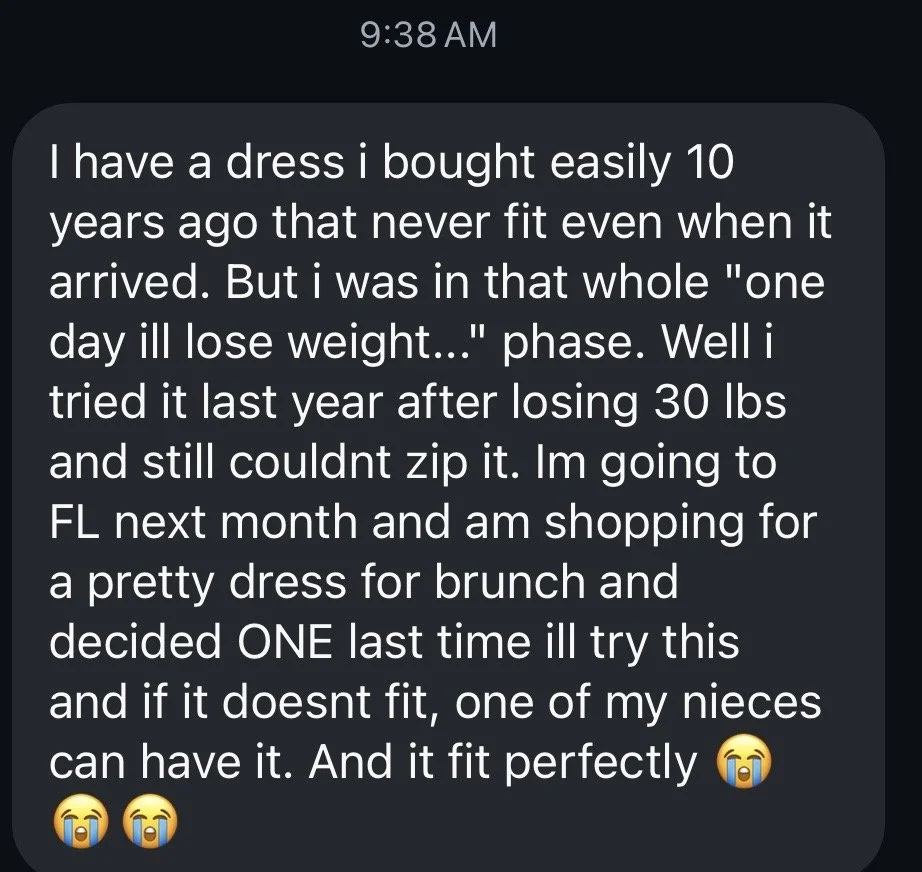
P.S. Look at this message from a TME member I received over the weekend!