Talking to the women who spent the 90s trying to get smaller and now are trying to get stronger.
I get asked a lot about my opinion on creatine. It's funny, because if you had asked me twenty-five years ago what creatine was, I probably would’ve told you it's a gym bro supplement for guys carrying gallon water jugs around the gym and left it at that.
But then I started my education and career (heavily focused on health and biology research) and gained a growing suspicion that creatine may be one of the most misunderstood supplements in all of women’s health.
The reason has less to do with bigger biceps ... and everything to do with energy.
The longer I work in health, the more convinced I become that nearly every conversation eventually becomes an energy conversation.
Energy to build muscle.
Energy to recover from workouts.
Energy to maintain bone.
Energy to think clearly.
Energy to regulate blood sugar.
Energy to heal.
Energy to adapt to stress.
Energy to navigate perimenopause.
Energy to stay physically capable and mentally sharp for decades.
You get it.
Every single one of those things depends on your cells being able to make and use energy efficiently. That’s where creatine enters the story.
The molecule you already have
Creatine is a naturally occurring compound your body already makes. Your liver, kidneys, and pancreas work together to produce it from amino acids. Your brain makes its own stash as well. On average, your body produces about 1–2 grams per day.
Total body stores sit somewhere around 120–160 grams, depending on muscle mass, body size, sex, and diet.
Most of it lives in skeletal muscle. The rest is stored in the tissues that have extremely high energy demands — including the brain, heart, and retina (eyes). Makes sense, right? Nature tends to place things where they’re needed most.
Food, and why most people are under-fueled without realizing it
You also get creatine from food -- primarily red meat and fish. A pound of beef contains roughly 1–2 grams of creatine. Most women are not eating a pound of beef daily. Many aren’t eating beef at all.
Fish like salmon and herring contain some too, but again, typical dietary patterns don’t usually come close to saturating what the body can use.
When we talk about supplementing creatine stores, it's about closing a gap between what the body makes, what food provides, and what human physiology can actually utilize under stress, aging, and training demand.
Why women may benefit more than young men
Women often start at a different baseline. We have lower average muscle mass, baseline creatine stores, dietary creatine intake and higher likelihood of long-term dieting patterns, of under-eating protein historically.
And then midlife arrives. Perimenopause adds another layer ...
Declining estrogen
Increased muscle loss risk
Reduced anabolic signaling
Changes in recovery capacity
Shifts in insulin sensitivity
Higher vulnerability to bone density loss
And often more brain fog / mental fatigue
ATP: the currency nobody talks about
Inside every cell is a molecule called ATP. (Stay with me here) ATP powers everything. Every heartbeat. Every step. Every workout, thought, moment of focus.
ATP is constantly being used and constantly being rebuilt.
Creatine exists as phosphocreatine — basically a rapid backup system that helps regenerate ATP quickly when demand spikes.
It's an emergency recharge system. Energy demands spike during stress, illness, sleep deprivation, training, hormonal shifts, and aging. Which is exactly why creatine research and findings make perfect sense.
Muscle is not cosmetic tissue
Most people first hear about creatine in the context of muscle. Makes sense -- It was discovered there first.
Athletes get stronger, power output improves, training capacity increases, recovery improves, and lean mass increases. So the science built itself around this performance angle.
But muscle is also metabolic tissue. It improves insulin sensitivity, regulates blood sugar, protects bone, acts as a glucose sink, supports long-term metabolic health, reduces the risk of frailty, and is strongly tied to longevity.
Yeah, so creatine supports the ability to train and maintain that muscle.
The brain story is super cool
Your brain is about 3 pounds and uses roughly 20% of your daily energy!!!
It is an energetically (very) expensive organ. Thinking, memory, emotional regulation, learning, and attention are all very expensive! The brain doesn’t just need neurotransmitters, it first needs energy to use them.
Some studies show improvements in memory and cognitive performance under conditions of sleep deprivation and high mental demand with creatine supplementation.
The emerging interest goes much further...
ADHD
ADHD appears to involve differences in energy utilization and mitochondrial function in certain brain regions. Creatine’s role in cellular energy production may eventually have relevance here. The data is early. But stay tunedddddd!
Mood (depression + anxiety)
Depression has traditionally been framed through neurotransmitters. However, newer research is looking at brain energetics. Several studies, particularly in women, have found interesting effects when creatine is used alongside standard treatment approaches for depression.
The hypothesis is pretty straight-forward...
If brain cells are energetically held back, supporting ATP availability may influence resilience, cognition, and mood regulation. Still early, but a very active area of research.
Migraines
Migraines are increasingly viewed as a disorder of brain energy metabolism. t's thought that neurons may struggle to meet energy demands, lowering the threshold for migraine attacks. Creatine is being studied as one potential support for energy buffering.
Concussion, TBI, Long COVID, chronic fatigue
These conditions look different on the surface, but share a common thread ...
Energy dysregulation at the cellular level. Trauma, inflammation, viruses, or neurological stress can all impair mitochondrial efficiency. That’s why creatine keeps showing up in research discussions across these conditions. Creatine wouldn't be a "cure", but just a potential energy buffer and part of the bigger treatment plan.
Neurodegenerative disease
In conditions like Parkinson’s and Alzheimer’s, brain energy metabolism is an active area of investigation. Again, same theme. Cells are struggling to meet energy demand. Creatine is typically not a 'treatment' for things, but part of a much larger research conversation about cellular resilience.
Energy + fatigue
Does it help energy?
Not like your coffee! But, potentially in a deeper way. Kinda like capacity rather than stimulation. Some people describe improved training output, reduced perceived fatigue, or better resilience during stress. Others notice nothing in particular, but still show improved performance markers.
Rest days, missed days, consistency
Creatine works by saturating tissue stores over time. Once those stores are elevated, they don’t disappear overnight. That’s why timing barely matters. Take it on workout days, rest days all the same. If you miss a day, no biggie. Miss a week? Levels slowly drift down, but it doesn't collapse.
Even after stopping, elevated stores can remain for weeks.
This is also why you should tell your healthcare provider if you're taking creatine — or have taken it recently. Creatine supplementation can increase blood creatinine levels, which is a normal breakdown product of creatine. Because creatinine is commonly used as a marker of kidney function, supplementation can sometimes make lab results appear abnormal even when kidney function is perfectly healthy. Knowing you're taking creatine helps your provider interpret those results in the proper context.
Loading dose vs not loading
Loading just means speeding up saturation.
Typical protocol: ~20g/day split into doses for 5–7 days Then transition to something like 5g / day maintenance.
Loading works faster, but there are more side effects. Maintenance works just as well over time.
Side effects
Most undesirable side effects can be prevented if you take a properly-sourced product (no unnecceary additives or contaminants), is taken with EXTRA water (it needs enough water to do its thing), or broken up into split doses (such as 2-3g in the morning and 2-3g in the evening).
Will it make you gain weight?
Sometimes the scale increases 1–3 pounds. This is primarily intracellular water — water stored inside muscle tissue. Not fat. Muscle cells become more hydrated. That’s actually part of the mechanism. But emotionally, that distinction often matters more than physiologically. Though the scale can go up, typically people feel they LOOK leaner.
Hair loss myth
This concern comes from a small study suggesting a potential change in DHT levels. It has not been consistently replicated and current evidence does not establish creatine as a cause of hair loss.
But it does remain something researchers continue to observe.
Kidney concerns (the myth that won’t die)
This is one of the most misunderstood topics. Creatine and kidney disease are not the same conversation. In healthy individuals, decadesssss of research show strong safety at standard dosing.
However, if someone has kidney disease or impaired renal function, supplementation should always be discussed with a healthcare provider. Context always matters more than blanket statements.
Pregnancy, breastfeeding, and kids
This is an evolving research area. Animal data is interesting and growing. Human data is still developing.
Because pregnancy and lactation involve extremely high physiological demands, this is an area where individualized medical guidance matters more than general recommendations especially at this stage of research.
Same with children and adolescents — context, goals, and health status matter significantly.
The supplement industry problem
The creatine market is a perfect case study in supplement marketing. A cheap, well-researched compound. Then branding, proprietary blends, and exotic forms with price inflation pop up.
Plain, old creatine monohydrate continues to outperform nearly everything in research volume and consistency.
Which is why I tend to focus on:
Creatine monohydrate
Third-party testing
Manufacturing transparency
Purity standards like Creapure® or. Creavitalis
The bigger question underneath all of this
One of the biggest mistakes modern health made was separating systems that biology never separated. Everything is connected through energy demand and energy supply.
Creatine is interesting because it supports processes your body already runs every second of every day. Your muscles need energy. Your brain. Your immune system, healing, adaptation, stress response, recovery. All. Need. Energy.
My guess is that future research will uncover far more connections and benefits beyond muscle (and even beyond bone and brain). I am predicting that we'll see researchers exploring more niche areas inside cognitive performance, resilience to sleep deprivation, recovery from illness or injury, perhaps a role in disease prevention, healthy aging, menopause, more about mood, metabolic health, and even how different people respond under different physiological stressors.
Energy sits upstream of almost everything the body does. And creatine is pat of the energy conversation. Whenever we find something that meaningfully influences energy availability, we eventually start finding connections in places we weren't originally looking.
I, personally, experiment with different doses. I'm happy with 5g a day most days, but will likely be bumping that base dose up as I progress closer to menopause. Also, I believe in adjusting the dose based on need. Jet lag, very sleep deprived, a particularly mentally exhausting or demanding day? Bigger dose or a double, split dose. Currently, it appears certain tissues "use up" creatine before others. For example, it seems muscles need be saturated before thee extra is able to cross the blood-brain barrier. Also, a larger dose is needed for other types of tissue (like bone -- creatine does not build bone, but helps to reduce bone breakdown).
I'd love to hear from you! Are you currently taking creatine? Thinking about it? Of course this is NOT personalized medical advice and is for informational purposes only. Chat with your healthcare provider before making big changes like supplementation.
The Metabolic Edge is officially open for July enrollment!
If you're looking for a place where women are working toward fat loss, muscle-building, health, strength, energy, and longevity goals together, we'd love to have you. Inside, you'll find workout programs, meal ideas, monthly challenges, coaching calls, workshops, guest experts, educational resources, accountability, and a community full of women who get it.
No trying to piece everything together from random social media posts. No doing it alone. Just one place to learn, implement, ask questions, get support, and keep moving forward.
Doors close tomorrow, so if you've been thinking about joining us, now's the time.
Stay wild + well,
Tara
P.S. In case you missed it
A vulnerable post
Week in my life
P.P.S. What I'm loving lately
Live Abbots veggie burgers! I have no affiliation with this brand, besides being a customer and fan (but they really should pay me at this point). They taste great, are made with wholesome ingredients, and have 22g protein and 9 (I think?) grams of fiber. Perfect for BBQs or burger bowls as a quick meal idea. I find them in Whole Foods.
Organifi -- Harmony, Gold, and Glow are my year-round favs! One is an unsweetened hot chocolate that supports my hormone health and tastes great. Another for inflammation / immunity and doubles as a "golden milk latte". And the last provides collagen pre-cursors so my body can make more on its own. I usually enjoy the first 2 (not together) as a warm evening drink and the Glow tastes amazing in plain, cold water or with. electrolytes added too for a refreshing, pink lemonade situation. (I have a discount code with them -- code TARAALLEN will save you 15%)
Method acting. Look, we all have wide ranges of "who we are". We can be the person full of doubt or confident before we know the outcome. We can be the person who gives the benefit of the doubt or the one annoyed and feeling personally attacked by everything everyone does. Before a meeting or important conversation or moment, I am loving a quick pause to decide how I will show up. I can often be found singing or dancing beforehand too. Haha. Try it! It's a pretty cool way to change your reality. We don't have full control of outcomes, but we sure as heck pull realities + feelings into our realm like a magnet. If we want a more beautiful life, we have to widen what our mind learns to call beautiful.
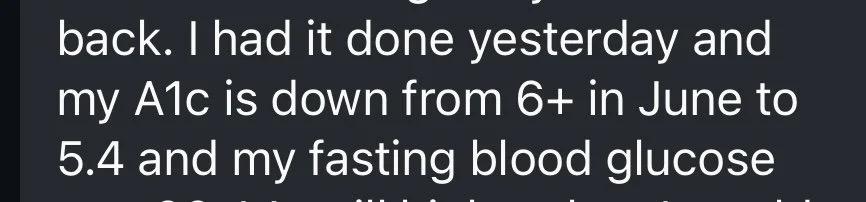
A note from a TME member: